Posts Tagged ‘bible’
The Rejoicing of the Law
Posted on: October 2, 2026
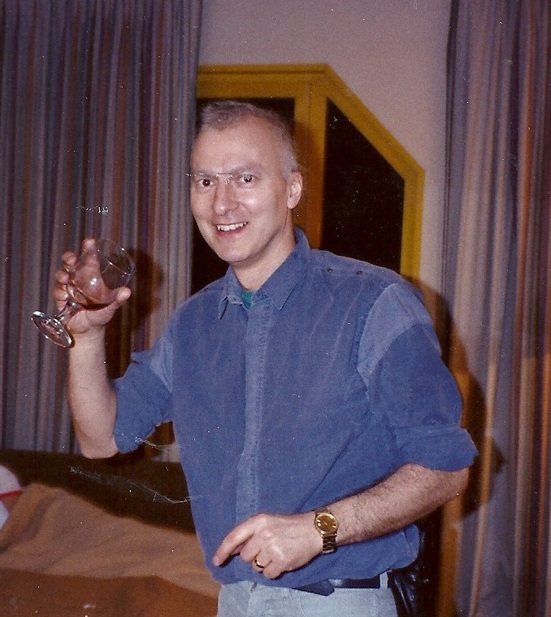
David in Jerusalem, February 1990
After getting the diagnosis of oesophagal cancer in September 1989, my husband David Gould was given the honour in the synagogue of being Chatan Torah at the festival of Simchat Torah, in October. The Chatan Torah, which means literally ‘Bridegroom of the Law’, has the task of reading the last few verses of Deuteronomy, the fifth book of the Pentateuch before the cycle recommences with the opening verses of Genesis, read minutes later by the similarly honoured Chatan Bereshit, the ‘Bridegroom of Genesis’ or of the beginning as the word Bereshit means ‘In the beginning.’
It was known in the kehilah, the community, that at the young age of 41, David was seriously ill and indeed chemotherapy had started, so, when he took to the pulpit, it could be seen that he had lost some weight and some hair. But my memory is already unpinning the facts, because I suddenly recall that David was too ill to attend the evening service, erev Simchat Torah. By the morning he was strong enough to go to the synagogue and do all that was required. Something I will never forget, often spoken of by others who were in the congregation, is that he sang the blessings after the haftarah with his eyes closed and a transcendent expression, singing all three blessings following the prophetic reading, whereas, in our Reform synagogue, it was customary to read only the last of the three. He had an operatic voice and was very good looking, even with the illness and its treatment, and it would have been memorable for anyone who was there.
In the thirty-six Simchat Torahs which followed, I always remembered that 1989 service. Sukkot and then Simchat Torah which concludes the week of the festival are described as ‘z’man simchatenu,’ the season of our rejoicing, and that is what it is supposed to be.
Everyone knows that the massacre of 7 October 2023 occurred at Simchat Torah. The kibbutzim of Be’eri, Kfar Aza, Nir Oz, Re’im, Netiv HaAsara, Alumim, Nahal Oz, the towns of Sderot and Ofakim and the Nova music festival all came under attack with many murdered and others kidnapped. As an acquaintance remarked on Facebook, ‘Simchat Torah is forever stained by the catastrophe of 7/10/2023,’ but it was not we who stained it. I know from my study of the Holocaust that there was no Jewish festival or notable day when atrocities were not perpetrated by the German occupiers against Jews of the ghettos, camps or cities where they could be hunted down. It was not only on Tisha b’Av, a day of mourning, when they rose up against us.
However, it is now a sad time rather than ‘the season of our rejoicing’ and, at my own synagogue, they will carry the Torah scrolls in silence for one of the circuits which used to be accompanied by joyful song.
I will not be there, which I regret, as I will be abroad, which I do not regret, as it will be for a happy reunion.
On 14 October 1663, diarist Samuel Pepys visited the synagogue in Creechurch Street and was shocked by what he considered the disorder of what was a jubilant Simchat Torah service.
...after dinner my wife and I, by Mr Rawlinson’s conduct, to the Jewish Synagogue: where the men and boys in their vayles, and the women behind a lattice out of sight; and some things stand up, which I believe is their Law, in a press to which all coming in do bow; and at the putting on their vayles do say something, to which others that hear him do cry Amen, and the party do kiss his vayle. Their service all in a singing way, and in Hebrew. And anon their Laws that they take out of the press are carried by several men, four or five several burthens in all, and they do relieve one another; and whether it is that every one desires to have the carrying of it, I cannot tell, thus they carried it round about the room while such a service is singing. And in the end they had a prayer for the King, which they pronounced his name in Portugall; but the prayer, like the rest, in Hebrew. But, Lord! to see the disorder, laughing, sporting, and no attention, but confusion in all their service, more like brutes than people knowing the true God, would make a man forswear ever seeing them more and indeed I never did see so much, or could have imagined there had been any religion in the whole world so absurdly performed as this.
I think I would have liked to be at that Simchat Torah service at Creechurch Street. If I ever get the means to time travel, perhaps I’ll see it for myself, although of course from behind the mechitzah, the lattice which Pepys mentions, behind which the women were secluded.
From one year to the next, there is no counting on rejoicing but one can count on the words which are always read out at this time:
וְלֹא־קָ֨ם נָבִ֥יא ע֛וֹד בְּיִשְׂרָאֵ֖ל כְּמֹשֶׁ֑ה אֲשֶׁר֙ יְדָע֣וֹ יְהֹוָ֔ה פָּנִ֖ים אֶל־פָּנִֽים׃
Never again did there arise in Israel a prophet like Moses—whom GOD singled out, face to face,
לְכׇל־הָ֨אֹתֹ֜ת וְהַמּוֹפְתִ֗ים אֲשֶׁ֤ר שְׁלָחוֹ֙ יְהֹוָ֔ה לַעֲשׂ֖וֹת בְּאֶ֣רֶץ מִצְרָ֑יִם לְפַרְעֹ֥ה וּלְכׇל־עֲבָדָ֖יו וּלְכׇל־אַרְצֽוֹ׃
for the various signs and portents that GOD sent him to display in the land of Egypt, against Pharaoh and all his courtiers and his whole country,
וּלְכֹל֙ הַיָּ֣ד הַחֲזָקָ֔ה וּלְכֹ֖ל הַמּוֹרָ֣א הַגָּד֑וֹל אֲשֶׁר֙ עָשָׂ֣ה מֹשֶׁ֔ה לְעֵינֵ֖י כׇּל־יִשְׂרָאֵֽל׃
and for all the great might and awesome power that Moses displayed before all Israel.
Deuteronomy 34:10 -12
They are followed, every year by these words:
בראשִׁ֖ית בָּרָ֣א אֱלֹהִ֑ים אֵ֥ת הַשָּׁמַ֖יִם וְאֵ֥ת הָאָֽרֶץ
When God began to create heaven and earth—
וְהָאָ֗רֶץ הָיְתָ֥ה תֹ֙הוּ֙ וָבֹ֔הוּ וְחֹ֖שֶׁךְ עַל־פְּנֵ֣י תְה֑וֹם וְר֣וּחַ אֱלֹהִ֔ים מְרַחֶ֖פֶת עַל־פְּנֵ֥י הַמָּֽיִם׃
the earth being unformed and void, with darkness over the surface of the deep and a wind from God sweeping over the water—
וַיֹּ֥אמֶר אֱלֹהִ֖ים יְהִ֣י א֑וֹר וַֽיְהִי־אֽוֹר׃
God said, “Let there be light”; and there was light.
Genesis 1:1-3
The Day After Yom Kippur
Posted on: September 22, 2026
I take some pride in saying that I no longer get a migraine during Yom Kippur, presumably because after decades of fasting on the appointed days, my body knows that the fast will end after twenty-five hours and does not feel the need to raise the alarm, which is often the trigger for a migraine.
Nevertheless, I have one now and just medicated for it, which is usually sufficient management for my increasingly rare migraines. It struck while I was looking again at the book of essays produced this year by the Movement For Progressive Judaism, entitled ‘Progressive Judaism, Zionism and the State of Israel.’ Most of the contributors are rabbis from the formerly named Liberal and Reform synagogues and a few are from religiously knowlegeable lay authors: political activists associated with anti Zionist organizations or publications. In some of the essays, older rabbis reflect that their earlier love for the State of Israel has been compromised in the years since 1967, when the State defends its control over disputed territories, which they would rather relinquish. Some of the clergy advocate a liturgy which makes room for expressions of fraternity with the Palestinians, with whom our fate seems to be intertwined.
This year, 2026, also known as 5787, was the first year when the congregation I have belonged to for more than half a century used the new Days of Awe prayer books, a two volume set for use on Rosh Hashanah and Yom Kippur. As some of the congregants mentioned, the two separate volumes work well, being considerably lighter than a single volume to be carried on both holy days. It is also easier to find the place and the Torah readings are conveniently inserted at the point in the text when they are read, rather than as addenda at the end of the book.
I usually participate in an aftertoon discussion group which meets between Mussaf and Minchah (additional and afternoon prayer services) so that congregants have an opportunity to talk about matters arising from the service or aspects of contemporary Jewish life. This year, we were to discuss the new machzor, the new prayer books for Rosh Hashanah and Yom Kippur. In preparation, I had opened mine on the kitchen table at home next to the previous, 1985 machzor, to compare and contrast at least a portion of it, the Mussaf service. The most consistent and obvious difference is the ungendered language of the new machzor in the English translations of the Hebrew, in discourse about God, which matches the language of the 2008 prayer book. God is not called King, Lord, Father, Master of the Universe or He. The translations are carefully chosen and I have written about them in a blog post some years ago called, ‘The Lord, the Lord: Translating the Tetragrammaton.’ If it were up to me, I would choose the poetic sound of the gendered language but I understand that people have good reasons for not wanting to speak of God as male.
The trend towards universalism has also been in place since 2008, with the words ‘V’al col ha olam’ ‘…and on all the world,’ added to the Kaddish which traditionally ends with the words ‘May He who makes peace in the highest make peace for us and for all Israel.’ It is reasonable enough to suppose that Israel’s peace depends on the peace of other countries. Another way of looking at ‘and on all the world’ is that it is insufficient to pray for our own people without pleading for the good of other peoples. I just hope that, quid pro quo, they are praying for us.
I also picked out a paragraph in the new machzor which I could not find in the previous one:
‘The High Priest’s third confession was for all Israel. Can this be sufficient for us today? God is God of all the earth and we are all partners in the repairing of God’s world, for a future and a hope. We must confess the part we play in the sins of humanity, for our action and our inaction.’
The idea that a confession ‘for all Israel’ devised in antiquity is insufficient for us today seemed to me to belong with a theme in some of the essays of ‘Progressive Judaism, Zionism and the State of Israel’, that being citizens of the world trumps our national identity as Am Yisrael, the People of Israel.
I think I was alone in this impression, so cannot assert it with much confidence. Neither can I believe that our citizenship of the world abrogates our identity as Jews or vice versa. I think the Progressive clergy would say that one reinforces the other.
Meanwhile, I have been greatly impressed by an essay in the Progressive Judaism book by Rabbi Andrea Zanardo , who advocates that educational resources should include remembrance of the mass displacement of Jews from Arab lands, as well as the history of the persecutions in Europe.
Rabbi Zanardo writes:
‘Hillel’s warning in Pirkei Avot remains the hinge: Al tifrosh min ha tzibbur, “Do not separate yourself from the community.” When prayers for Israel are stripped of kibbutz galuyot – the gathering of exiles – of Middle Eastern/North African refugee history, and of language that acknowledges defence and survival, they cease to sound like prayers spoken by a people.’
One might suppose that Tikkun Olam, the repairing of the world, was the foremost commandment of contemporary progressive Judaism. Certainly, the phrase occurs in our ancient prayer Aleynu, ‘l’takken olam b’malchut Shaddai,’ ‘…the world will be set right by the rule of God.’ ‘Malchut’ is literally kingship, but it is translated in our prayer books as ‘rule’ to avoid the maleness of kings and kingship.
But Tikkun Olam is not mentioned in the Ten Commandments, nor in the Shema. In this insistent reaching for the world, ha olam, are we at risk of letting our peoplehood slip away? Not to worry – the other nations of the world, concerned with their own identity, will not let us lose sight of ours.
‘
David’s Shield
Posted on: June 4, 2026
I wear a Star of David pendant which, occasionally, I twist round so that the star is at the back and not visible. This happens only when I judge discretion to be the better part of valour, for example, when I last had a covid vaccination. The chances that the kindly clinician will give me a vicious jab with the syringe are vanishingly remote but one does not want to arouse hostility in this situation.
It is sometimes argued that a placard often held aloft at pro Palestinian demonstrations depicting a Star of David being thrown into a rubbish bin is merely criticism of Israel which does of course display the star on its national flag. In support of this position, it is then argued that the Magen David is not an authentic Jewish symbol. It is not biblical, they say.
It should be noted that the Hebrew word magen means shield, not star, and magen is attested frequently in the Hebrew bible as a metaphor for the Almighty, who tells Abraham, ‘Fear not Abram, I am thy shield.’1 This was before the childless Abram received a theophoric syllable, making his name Abraham, ‘father of many.’
Moses, in his long address to the Children of Israel, the content of the book of Deuteronomy, tells them that God is ‘the shield of your help.’ 2
David, in his Psalms, sings ‘You O Lord are a shield about me,’ 3 ‘my strength, in whom I will trust; my shield, and the horn of my salvation’4 ‘…for the Lord God is sun and shield,’5 ‘Israel, trust in the Lord; He is their help and their shield.’ 6
There are many more instances of David using magen – shield – as a metaphor for God and an illustration of his relationship with God.
In the liturgy too, the first paragraph of the Amidah prayer concludes, ‘Blessed are You God, the Shield of Abraham,’ and the blessings after the haftarah, the reading from the Prophets, include ‘Blessed are you God, the Shield of David,’ in Hebrew, Magen David.
There are many more biblical and liturgical instances of this phrase, which account for the attachment to the symbol of the six pointed star, bearing the name, ‘Shield of David.’ As for the shield which David carried into his many battles, we do not know what it looked like. The bible is not as descriptive as, for example, the works of Homer, except in the case of the building of the Tabernacle in the wilderness, the template for the later Temples in Jerusalem. This is a case of specific instructions rather than description: the passages I have heard being alluded to as the DIY chapters of Exodus. Rarely is there a description of a person beyond the hint of their being well-favoured or tender-eyed, ruddy or tall or, in the case of the Moabite King Eglon, obese.
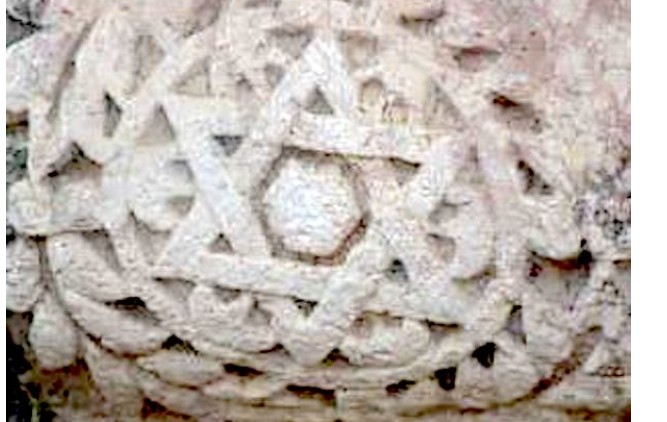
The six pointed star appears on the cover of the Leningrad Codex, the earliest extant version of the Masoretic text, which is to say a Hebrew bible with the vocalizing marks not found on the scrolls from which biblical passages are read in the synagogue. Housed at the National Library of Russia in St Petersburg, the Leningrad Codex was produced in Cairo according to a colophon at the end of the book, in the early eleventh century. The Star of David appears on the mosaic floor of a third century synagogue in Galilee but usage of the symbol occurs also in other cultures.
In Kabbalistic thought, the two intersecting triangles were symbolic of people reaching towards heaven and heaven reaching down towards earth.
In seventeenth century Prague, the Jewish community adopted the six pointed star as their symbol. It appeared on the Altneuschul and, across Central Europe, the hexagram was used widely in synagogal decoration and on Jewish gravestones. It appears on most tombstones in Jewish cemeteries.
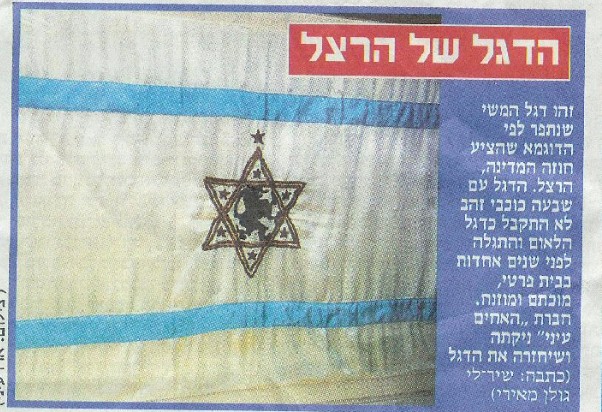
In 1897 at the First Zionist Conference in Basel, it was chosen as the symbol to be displayed on the flag of the future Jewish State. Blue and white alluded to the blue and white of the traditional tallit, the fringed prayer shawl. The image below is headed, ‘Herzl’s flag’. The Lion of Judah is positioned at the centre of the star. This was dropped from the Israeli flag which centres the intersecting triangles of the Star of David but the lion appears on contemporary municipal seals in Jerusalem.
Notoriously, a yellow Star of David inscribed Jude meaning Jew was the obligatory badge to be worn by Jews in German occupied lands in World War Two. This was used to facilitate segregation, exclusion, ghettoization and eventually the deportation of Jews to the concentration camps.
On Independence in 1948, the star on a blue and white background was chosen as the State of Israel’s national flag. Just as the Jewish star was used in the Third Reich for the ostracism of Jews, the star is used in anti Zionist culture to ostracize Israel, depicted not just discarded in a bin but dripping with blood, sometimes with a different vice named for each of the six points. This, they say, is merely criticism of Israel.
The symbol remains ubiquitous in Jewish communal locations and wearing it as jewellery or on clothing has a stronger pull than ever, despite the arguable risk of arousing hostility.
The word magen, shield, is derived as is gan, garden, from the root letters גנן, GNN, to defend. In European languages too, there are etymological connections of gardens with guarding. A garden is an enclosed area, defended by fences or walls.
The Talmud refers to the phrase ‘Shield of David,’ in connection with the verse from the second book of Samuel: ‘I have made for you a great name, like the names of the great ones that are in the earth.’7
״וְעָשִׂיתִי לְךָ שֵׁם גָּדוֹל כְּשֵׁם הַגְּדוֹלִים״, תָּנֵי רַב יוֹסֵף: זֶהוּ שֶׁאוֹמְרִים ״מָגֵן דָּוִד״
‘Rav Yosef teaches, “This means that people will say, the Shield of David.’8
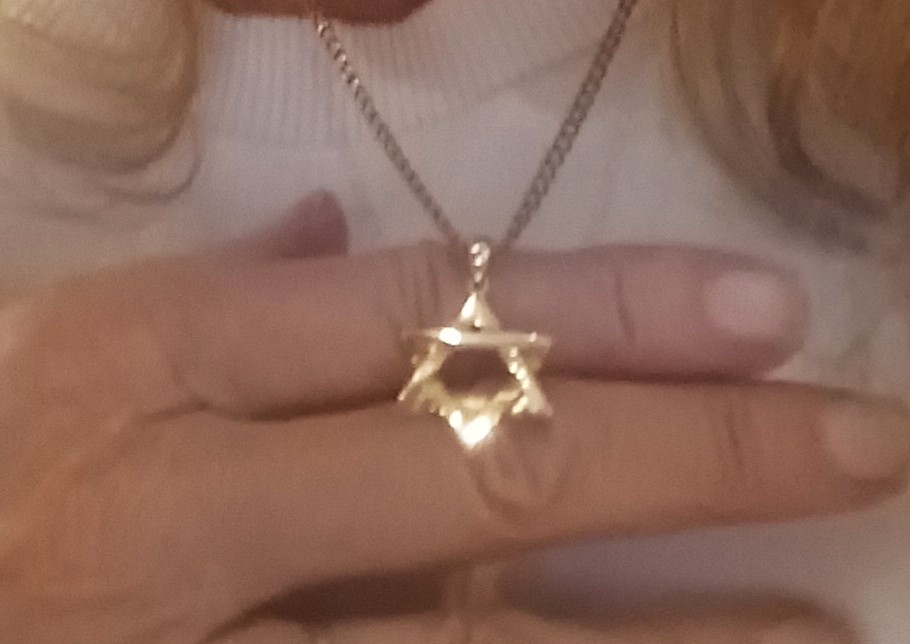
When I was born, here in London, my aunt in Australia sent me a little gold Magen David. I wore it often and somehow lost it, when I was a adult. When I turned seventy, I asked my children to buy me a Magen David on a chain, which they did and I never take it off. It is a star, a shield, a promise and continuity of both time and space.
From Peniel to Tel Aviv
The name first appears in Genesis 32:28, when Jacob wrestles with a celestial being.
Then he said, “Let me go, for dawn is breaking.” But he answered, “I will not let you go, unless you bless me.”
וַיֹּ֥אמֶר אֵלָ֖יו מַה־שְּׁמֶ֑ךָ וַיֹּ֖אמֶר יַעֲקֹֽב׃
Said the other, “What is your name?” He replied, “Jacob.”
וַיֹּ֗אמֶר לֹ֤א יַעֲקֹב֙ יֵאָמֵ֥ר עוֹד֙ שִׁמְךָ֔ כִּ֖י אִם־יִשְׂרָאֵ֑ל כִּֽי־שָׂרִ֧יתָ עִם־אֱלֹהִ֛ים וְעִם־אֲנָשִׁ֖ים וַתּוּכָֽל׃
Said he, “Your name shall no longer be Jacob, but Israel, for you have striven with beings divine and human, and have prevailed.”
The etymology of the name Israel is explained by the angel as ‘Sarita,’ you have striven. Sin resh hé, SRH, is the root of the verb to persevere or exert oneself, contend. El designates the Almighty and the H, a weak letter, falls away. The yod prefix which appears as the I of Israel indicates third person masculine.
The nationhood of Israel in the bible
By the beginning of Exodus, it is established that the narrative concerns B’nei Israel, the children of Jacob.
Exodus 1:1
וְאֵ֗לֶּה שְׁמוֹת֙ בְּנֵ֣י יִשְׂרָאֵ֔ל הַבָּאִ֖ים מִצְרָ֑יְמָה אֵ֣ת יַעֲקֹ֔ב אִ֥ישׁ וּבֵית֖וֹ בָּֽאוּ׃
These are the names of the sons of Israel who came to Egypt with Jacob, each coming with his household.
בְנֻחֹ֖ה יֹאמַ֑ר שׁוּבָ֣ה יְהֹוָ֔ה רִֽבְב֖וֹת אַלְפֵ֥י יִשְׂרָא
In Psalm 114 ‘When Israel came out of Egypt,’ Israel as contrapunctual with Jacob.
בְּצֵ֣את יִ֭שְׂרָאֵל מִמִּצְרָ֑יִם בֵּ֥ית יַ֝עֲקֹ֗ב מֵעַ֥ם לֹעֵֽז׃
Avinu Malkenu
אָבִֽינוּ מַלְכֵּֽנוּ הָרֵם קֶֽרֶן יִשְׂרָאֵל עַמֶּֽךָ:
Our Father, our King! raise up the might of Israel Your people.
Deuteronomy 6:4
שְׁמַ֖ע יִשְׂרָאֵ֑ל יְהֹוָ֥ה אֱלֹהֵ֖ינוּ יְהֹוָ֥ה ׀ אֶחָֽד׃
Hear, O Israel. יהוה is our God, יהוה alone.
Amos 9:14
וְשַׁבְתִּי֮ אֶת־שְׁב֣וּת עַמִּ֣י יִשְׂרָאֵל֒ וּבָנ֞וּ עָרִ֤ים נְשַׁמּוֹת֙ וְיָשָׁ֔בוּ וְנָטְע֣וּ כְרָמִ֔ים וְשָׁת֖וּ אֶת־יֵינָ֑ם וְעָשׂ֣וּ גַנּ֔וֹת וְאָכְל֖וּ אֶת־פְּרִיהֶֽם׃
I will restore My people Israel.
They shall rebuild ruined cities and inhabit them;
They shall plant vineyards and drink their wine;
They shall till gardens and eat their fruits.
The two kingdoms
The two kingdoms were called Israel and Judah. They separated when there was a revolt among the tribes in the North against the authoritarianism of Rehoboam, son of Solomon. The kingdom was then divided, with Jeroboam as king of Israel in the north and Rehoboam as king of Judah in the South. Only the tribes of Judah and Benjamin remained in Rehoboam’s kingdom with its centre in Jerusalem. The other ten tribes were in the northern kingdom, with its capital in Shechem, which is now known as Nablus in the West Bank. The modern name of the city can be traced back to the Roman period, when it was named Flavia Neapolis by Roman emperor Vespasian in 72 CE. Following the Muslim conquest in the 7th century, the city was given its present-day Arabic name of Nablus.
Jeroboam installed golden calves in the northern tabernacles. When you read the book of Kings, the kings in the southern kingdom were mixed, some good,some bad, but in the north nearly all were bad. The assessment of a king as good or bad depends on the extent to which he prioritises the Temple and its cult. The northern kings were therefore at a disadvantage, and Jeroboam’s altar at Bethel with its two golden calves is a symbol of corrupt kingship.
Were we called Israel in the diaspora?
Although we are called Jews in English speaking countries, in Russian and Italian, we are known as Yivrei and Ebrei (both variations of “Hebrew”), and in formal settings—such as the names of institutions—Israelite is often preferred in German, Spanish and French.
The previous siddur of the Reform Synagogues of Great Britain offered six themed shabbat morning services, each with slightly different additions to the basic order of prayer, which was the same in each. Service number six was on the theme of ‘The Family of Israel’. The recommended psalm was 126, When God brought the captives to Zion,’ which is recited before Birchat Hamazon, often to the melody of Hatikvah. A biblical paragraph in the service is from 1 Kings 8:55ff where Solomon the king says ‘Blessed is God who has given rest to his people Israel, as He promised.’
The naming of Medinat Israel
Under the Persian Empire, when the Jews returned from the Babylonian exile, the land was called Yahud and under the Romans it became Judea.
Some of the Yishuv pioneers, settling in Israel in the 1880s called themselves Biluim, from a slogan whose acronym was Bilu, Beit Yaakov Lechu V’nelcha, from Isaiah: בֵּ֖ית יַעֲקֹ֑ב לְכ֥וּ וְנֵלְכָ֖ה בְּא֥וֹר יְהֹוָֽה. Another group were the Hovevei Zion, said to have founded Rishon L’Zion, meaning ‘First in Zion’.
On May 14, 1948, when David Ben-Gurion declared statehood, he said: “We hereby declare the establishment of a Jewish state in Eretz Israel, to be known as the State of Israel.”
Why was it not called Judah or Zion? The locations designated by these names were outside the borders of the new state, as East Jerusalem was allocated to Jordan. In the various drafts of the declaration, the space for the name was left blank.
From Zeev Sharef, a minister in Ben Gurion’s Cabinet:
Most people had thought that the state would be called Judea (Yehuda in Hebrew). But Judea is the historical name of the area around Jerusalem, which at that time seemed the area least likely to become part of the state. Also, it applied only to a very small territory. So Judea was ruled out…“Zion” was also suggested, but Zion is the name of a hill overlooking the Old City of Jerusalem.
Again, the geographic Zion wasn’t going to be a part of the new Jewish state.
Yitzhak Gruenbaum, the chairman of the Jewish Agency Rescue Committee during the Holocaust, and the first minister of interior of Israel, made the argument for the name Judea and against Israel, and years later explained his rationale in these words:
I opposed the name Israel. It reminded me of the name israélite [in French] … instead of juif, which was considered derogatory. We Zionists embraced the derogatory “Jew,” which was the name of our people from the return from [Babylonian] exile. I favoured the revival of this name, which the masses of the [Jewish] people accepted in their spoken languages. Another name was liable to divide the state from the Diaspora.
If Judah had been chosen instead of Israel, citizens of Israel, whether Jewish or Arab, would have been Yehudim, which seems unthinkable. And we can see how the name Israel makes a distinction between Israelis and the Yehudim of the Diaspora.
Enmity in the diaspora
There can be no doubt that Israel appears throughout the liturgy, in Tanakh and in the rabbinic writings as the collective term for our nation, our religion, our people. In contemporary debate, hostile persons often assert that we who consider ourselves B’nei Israel are imposters from some region remote from the land of Israel. They tell us to go back to Khazaria or go back to Poland, although it is unlikely that this is said by anyone actually in Poland. We know from history that our long sojourn in Poland ended badly. The antagonists dislike the creation of a modern Hebrew language, sometimes considering Yiddish more acceptable. Among antisemites, the word Ashkenazi is paired with the word Zionist but their hatred for the Jewish citizens of the State of Israel means they want the elimination of Mizrachim and Sephardim and the Beta Jews of Ethiopia, along with the Ashkenazim.
From Chief Rabbi Mirvis, in The New Statesman, this week.
It is said that Chaim Weizmann, who would later become the first president of the State of Israel, was once asked by a member of the House of Lords why Jews were so fixated on one tiny, contested piece of land. Were there not other territories in which a Jewish state could be established? Weizmann responded that this would be like asking why he had driven 20 miles to visit his mother, when there were many other perfectly nice old ladies living on his street.” and that “… Today, Jews are extremely diverse politically, religiously and culturally, but remarkably are united by few things more than the centrality of Israel.
In the last year, Israel has been present for us very much in the sense of geography, current politics and war. The atrocities of 7 October struck most of us to the core because many of us have family and friends in Israel and, even if not, diaspora Jews often have a strong association with the State of Israel and engagement with it especially in time of danger. The war has ensued with Gaza and Lebanon while Israel is attacked also from Iran and Yemen and to some extent from the West Bank. It is in the eye of a storm reported every day all over the world, headlining above all other foreign news and generally the press, the UN and NGOs like Amnesty and many politicians in the west claim that Israel is conducting a brutal, expansionist war. To identify with Israel is to be called genocidal baby killer and, in some professions it is deleterious to acquire this reputation.
At the Academy Awards, Jonathan Glazer, an alumnus of JFS and director of the film ‘The Zone of Interest’ about the Auschwitz commandant Rudolf Höss, made an acceptance speech in which he said:
‘…We stand here as men who refute their Jewishness and the Holocaust being hijacked by an occupation which has led to conflict for so many innocent people. Whether the victims of October 7th in Israel or the ongoing attack on Gaza, all the victims of this dehumanization — how do we resist?’
To give him the benefit of the doubt, he probably did not intend to do harm with these words to Jews worldwide. He probably was horrified by the effectiveness of Israel’s war on Gaza and the loss of life. A different perception is that, when prominent Jews use their public platform to excoriate Israel, they are harming us all. In the case of Glazer, he encouraged Israel’s critics to use the Shoah as an attack weapon against Israel, likening the government and the defence forces to nazis, a simile which is deployed daily by the far right, for example Nick Griffin, many on the left and unfortunately more and more in the soft centre.
Yidden
In my parents’ generation it was not uncommon to use the word Yiddish more than any other to denote Jews: ‘Not many Yidden there,’ ‘He has a Yiddisher punim,’ and so on. The mamalashon was Yiddish, not Hebrew. Yiddish is still preferred by anti Zionist orthodoxy, who do not use the holy tongue for everyday speech and, by contrast, the secular anti Zionists of the left approve of Yiddish rather than Hebrew which they consider the colonialist language.
The pronunciation in our shul and in the Reform movement is a nod to the Hebrew of Israel and of Sephardim. Saying Succos and Simchas Toirah sounds mildly out of step in our minhag although many of us had to learn to pronounce tav as a T not an S and cholem vav as o rather than oi.
I might say that while the antisemites of the far right call us Yids, the antisemites of the far left call us Zios. But in point of fact, they borrow from each other so one cannot always tell one from the other. Both extremities avoid saying the name Israel, preferring ‘The Zionist Entity,’ the slangy ‘Israhell’ and print variations where, for example, the dollars sign is substituted for the S in Israel.
The nation
The phrase עם ישראל חי, the People of Israel live, has become a ubiquitous slogan among diaspora Jews although I’m told that in Israel it is used mainly by the right wing parties. As עם means nation (cognate with Arabic umma) it is a declaration of the nationhood of the Jewish people.
October 2024

