Archive for the ‘Uncategorized’ Category
Ramblings on Chosenness, the Deuteronomist, Tevye the Milkman and Dave Allen
Posted on: November 16, 2018
When antisemitism gets into gear, whether on the right or the left, there is usually someone who will refer to The Chosen People and their perceived iniquities. When you see this phrase on one of the online forums, you know it isn’t going to be complimentary. People who are disposed to be hostile think it implies that Jews have a sense of superiority and entitlement and consider ourselves above the law.
One might tell them the midrash about God offering the Torah laws to all the nations. No one wanted to be encumbered by so many commandments except the Jews who, seeing Moses coming down from Sinai with stone tablets said ‘We’ll take two.’ The seven Noahide laws are for all mankind, but the 613 commandments relating to multifarious topics including kashrut, ritual purity, sabbath observance and textiles are not required of non Jews.
The apostles wrote of this to the people of Antioch who were being converted to Christianity and their letter was conveyed by Paul and Barnabas:
For it has seemed good to the Holy Spirit and to us to lay on you no greater burden than these requirements: 29 that you abstain from what has been sacrificed to idols, and from blood, and from what has been strangled, and from sexual immorality.
Isn’t it usually the case that those who engage in faith action feel themselves in a unique relationship with the deity? How would prayer in any denomination count, if the individual was insignificant?
The word chosen is dominant in Jewish liturgy, especially in the past tense, where it is God who has chosen. The blessing before the Torah reading in a synagogue includes the words:
Blessed are You, our Living God…who chose us from all peoples to give us Your Torah.
In the blessing before the prophetic reading, we say:
Blessed are You God, who chose the Torah, Moses Your servant, Israel Your people and the true and righteous prophets.
Pointing out that the people of Israel are chosen for Torah observance and not for perks denied other peoples will not satisfy those who believe the essence of Judaism is elitism, a commonplace antisemitic trope, hospitable to the concept of Jews having ubiquitous influence and power and far removed from the reality of Jewish teaching.
Recurring themes in Jewish prayer are gratitude to God for the giving of the Torah and for the Exodus from Egypt; love for God and love for our fellow human beings.
Only in recent years, when I see a sneering reference to ‘The Chosen People’ – and I see it now more frequently than ever – do I wonder how I would communicate to the person who takes that negative view of Jews and Judaism the significance of ‘choose’ and ‘chosen’.
There are many instances of the word bachar, ‘he chose,’ in the Hebrew bible, but the chosenness of the people is repeated particularly in Deuteronomy, perhaps the earliest written book of the Pentateuch.
For you are a people holy to the LORD your God. The LORD your God has chosen you to be a people for his treasured possession, out of all the peoples.[3]
There is some consensus in bible study that the book of the law found by Hilkiah the priest in the time of King Josiah is none other than Deuteronomy, to which the cited language and theology correspond.
The story is that King Josiah ordered renovations of the Temple and, while the builders were in, a scroll came to light and was brought to the king.[4]
The Deuteronomist(s), whose date(s) cannot precisely be known, is presumed to have lived well before the Greek and Roman Empires. The Jewish religion is based on books and words which record the covenant between God and Israel, and Josiah was distinctive among biblical kings in basing his rule on scripture.
Modern Judaism seeks to explicate this notion of chosenness, present in our liturgy to this day, as not denying the chosenness of other peoples.
Immanuel Jakobovits, Chief Rabbi of the United Hebrew Congregations from 1967 to 1991 put it this way:
I believe that every people—and indeed, in a more limited way, every individual—is “chosen” or destined for some distinct purpose in advancing the designs of Providence.[5]
Jews are chosen to adhere to a covenant set forth in the Hebrew Bible and developed over the centuries, from Rabbinic Judaism to the codifiers of the Middle Ages, to the philosophers of the Enlightenment, to post Holocaust modernity and the age of the nation state of Israel.
All who live are chosen for life, and people of faith are chosen in the service of their faith. Their devotion is not always rewarded in any obvious way.
Tevye the milkman in Fiddler on the Roof apostrophizes God:
We are Your chosen people. But, once in a while, can’t You choose someone else?[6]
Nevertheless, people tend to love the belief systems of their own faith more than that of any other, much as we tend to love our own children and our own parents more than we love other children and parents. It seems fair to respect all paths to the supernal. Religions are not accountable for transgressions between one human being and another, or between human beings and the world.
I’ve often thought that one of the great theologians of my lifetime was the comedian Dave Allen, because he used to end his show with the words:
Goodnight, thank you, and may your God go with you.
[1] Acts 15:28-29
[2] Deuteronomy 7:6; Deuteronomy 14:2
[3] 2 Kings, 22:8-11
[4] Religion Gone Astray: What We Found at the Heart of Interfaith
By Don Mackenzie, Ted Falcon, Jamal Rahman 2012
[5] Fiddler on the Roof Jerry Bock, Sheldon Harnick, Joseph Stein, first production 1964 Read the rest of this entry »
The K Word
Posted on: October 23, 2018
Foreword
I wrote the article below during the time when Jeremy Corbyn was leader of the Labour Party, at that time, in with a chance of becoming Prime Minister. We were spared this outcome but are going through a very difficult time now in 2025 as, when Israel is at war, the diaspora feels the shockwaves. Whenever a Jewish person joins with antisemites in spreading libels and sowing hatred, the question often arises of whether they are really Jewish or just professing the identity to make their accusations seem more reliable, as if based on genuine insights. One would always prefer it if they were not our own but sometimes they really are: one knows the family or the background because the Anglo-Jewish community is a small world. How far they succeed in spreading antisemitism – the potency of their influence – determines the level of opprobrium they arouse among other Jews. And one cannot help feeling mystified and very sad.
*
Kapo. It is as offensive as Uncle Tom or Coconut, with similar imputations of treachery and servility.
Kapos were prisoners in Nazi concentration camps and, under duress, they performed work delegated by the SS guards. From the point of view of the SS administrators, Kapos served the purpose of relieving their workload while dividing Jewish prisoners against each other. Some were sadistically brutal to the prisoners they supervised. All were collaborators by force of circumstance and all were victims of the system. The taint of treachery, disloyalty and collaboration with the enemy is attached to this word, kapo, which originally designated those Jewish prisoners in the camps who were promoted to a functionary role which probably helped to keep them alive.
Treason is one of the most hated crimes, odious to the group or nation betrayed by the traitor and punished with the severest judicial penalties. Wartime collaborators often suffered extrajudicial punishments , including executions.
The anger felt towards a collaborator can be commensurate with the damage they achieve. The damage rather than the intention quantifies the response. Ethel Rosenberg was executed for typing up the notes her husband passed to Soviet contacts. It was believed that the notes assisted the Soviet nuclear programme and it was a capital offence.
The self-preservation instinct after the fall of an enemy may exacerbate the cruelty visited on collaborators. Consider the persecution in France in the years after WW2, meted out by those who may not have been personally blameless, on women considered guilty of collaboration horizontale. Pointing out another’s collaboration could deflect from their own, so the women who had been intimate with the German occupiers were made to carry the blame.
In recent times in the UK, Jewish political activists whose efforts are construed as injurious to the Jewish community are sometimes reviled with the word kapo. Those who use the word are often rebuked, as it is pointed out that far from acting freely, kapos were also victims of the Nazis. Furthermore, those who have discovered their Jewish identity in an anti-Zionist cause probably believe that they are motivated by the pursuit of justice, rather than with the aim of whipping up anti-Jewish feeling. Nevertheless, with antisemitism now a force to be reckoned with in the UK Labour party, the strident denials of Jewish Voice for Labour and Free Speech on Israel, in defence of Jeremy Corbyn, BDS and PSC arouse resentment in Jewish communities, especially as their raison d’être seems to be to expel from the Labour mainstream Jewish organizations of long standing in the Party which was their political home.
Today, the Jewish Chronicle carries the story that a member of the anti-Israel but Jewishly observant Jewdas group has been giving training in antisemitism to members of Dulwich CLP.
‘A left-wing activist from the controversial Jewdas group compared Zionism to Nazi ideology when she gave “antisemitism awareness” to a Labour Party branch meeting.
During her 55-minute speech to the Dulwich and West Norwood Labour branch on Thursday, self-declared “non-Zionist” … also claimed there was “room for discussion” about collaboration between the “Nazi Party and members of the Zionist movement.”
[She] said “Zionism is a racist ideology”, adding it was “not possible to have a democratic Jewish state”.’
By using her Jewish identity to suggest special knowledge, the Jewdas member promulgates the view that Jews who support Israel are racists and that Israel is a racist enterprise. She instructed Dulwich Labour members that:
‘…antisemitism within Labour is being employed to attack Corbyn’s leadership and has been since day one…because of his views on Israel.’
This should be a popular view among supporters of Jeremy Corbyn and will resonate with JVL and Neturei Karta as well as with the aptly named Jewdas.
Many British Jews are worried about the possible injury to our safety and standing in the United Kingdom. Mr Corbyn may yet become Prime Minister and, outside of Jewdas and JVL, there is a widespead fear that this would prove detrimental to Jewish life.
Meanwhile, there are Jewish people who insist that Corbynism is not harmful to Jews or that we need to come to an accommodation with the various Holocaust revisionists and conspiracy theorists now holding office in the Labour Party. They regard those of us who are aghast at developments since Corbyn became Leader of the Opposition as spinning a false narrative in defence of the State of Israel. Their arguments are approved and applauded in many of the constituency Labour parties. They may be held in opprobrium by large numbers of Jews, but their Jewish identity has proved potent in defending Corbyn from charges of antisemitism. They are the best weapon he has.
The K word is indeed inappropriate and has the indecency that belongs to certain swear words but it is provoked by the inimical energy of the Corbyn movement, which seems to be in the ascendant. It has the force of any profanity. For a period of time, kapos wielded power over other Jews, and power, while it lasts, may be less forgivable than treachery.
A thought: perhaps we should lose the word kapo and bring back the word herem? Why use insults when we can resort to anathema?
*
Afterword
Now, in October 2026, there are two prominent Jewish politicians who have attracted this unpleasant word. One is the Foreign Secretary, Ed Miliband, who announced to the frenzied demonstrators and their never ending marches demonizing Israel and threatening Zionists, ‘We hear you. You are right.’ If he were not the Foreign Secretary, the outrage would not be so great, but it is a position of power and he harms us. The other is Zack Polanski who benefited a few days ago by a videoed message of solidarity from Jeremy Corbyn, who thinks the media are most unfair in linking Polanski with antisemitism. The Green Party have passed their ‘Zionism is racism’ motion at conference, also voting against checks and balances for the protection of Jewish members of their party. The exodus of Corbynists from Labour swelled the ranks of the Greens, not only under Zack Polanski but as soon as the previous tenant of 10 Downing Street, Keir Starmer, became leader of the Labour Party and repudiated antisemitism.
Anecdotally I find the names Ed Miliband and Zack Polanski arouse deep contempt among most of my acquaintances. They have their admirers, I know from social media, but I have heard the K word deployed against them and, although it is not my word, I feel they are asking for it.
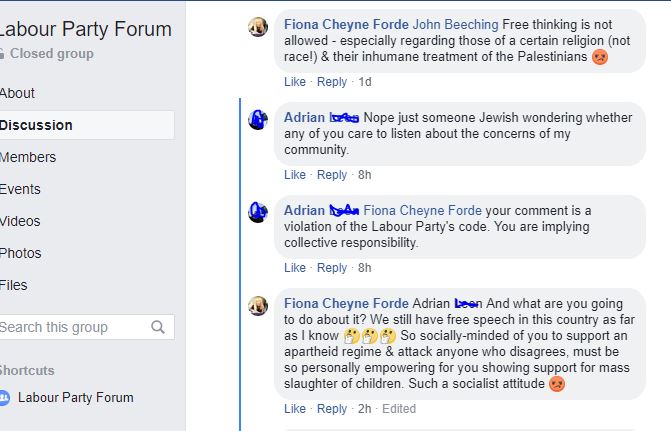
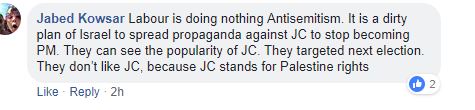
One of the Labour forums shows a video today which purports to be Israeli soldiers cheering while a sniper shoots a Palestinian. Text accompanying the video refers to the Palestinian victim as a child. The source of the video appears to be the Israeli newspaper Haaretz.
This is a report from Haaretz, 10 April 2018,
The findings of a preliminary inquiry, launched on Monday after the video surfaced, were that the sniper acted appropriately and only fired after all other actions taken by the soldiers were did not succeed in preventing the man from approaching the fence. However, the inquiry also found that the exuberant soldiers heard in the video acted improperly and will face disciplinary proceedings.
The army said that the video was made on December 22, 2017, during Friday riots along the border with the Gaza Strip.
“Many steps were taken during the riots to disperse them, including loudspeaker [announcements] and calls to stop, the use of means for dispersing demonstrations and firing in the air,” stated the inquiry’s findings. “When all these did not help, a single bullet was fired at one of the suspects in organizing and leading the incident when he was only a few meters from the fence. As a result of the fire he was hit in his leg and injured.”
The video was not shot from the sniper position and the person who filmed it was not part of the sniper team that fired the bullet, the army said.
After the full operational inquiry is completed by the entire command staff, the findings will be provided – as is customary – to the Military Advocate General for examination.
“As for the unapproved filming of an operational incident, distribution of he filmed material and the expressions heard in it, it should be noted that this is not the spirit and the level of restraint expected from IDF soldiers and it will be handled appropriately on a disciplinary level,” stated the findings.’
According to Haaretz, the video is problematic but the accompanying text about it on JCLPF is as follows:
‘Proof that Israeli soldiers target Palestinian children (and rejoice when they make a hit!) Video from Israeli newspaper.’
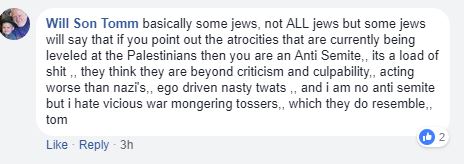
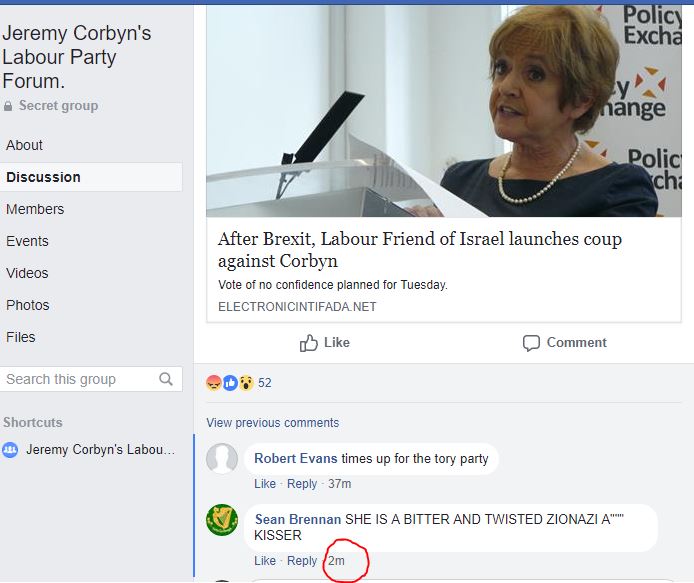
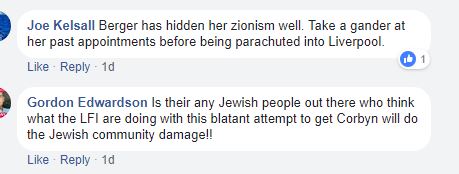
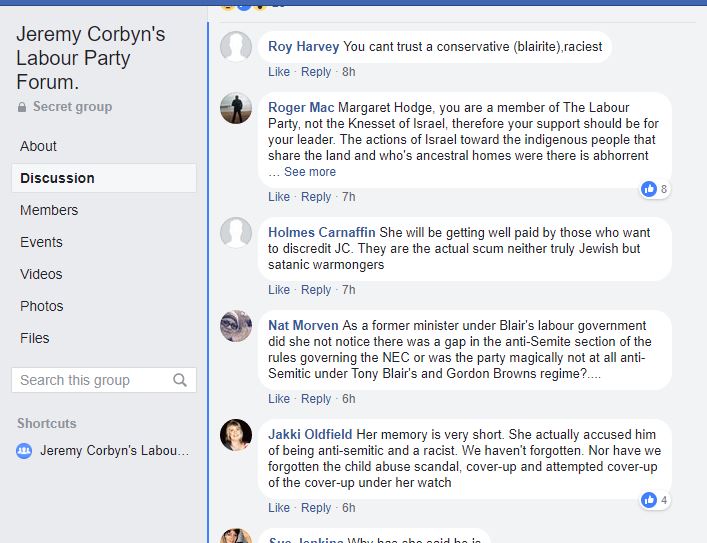
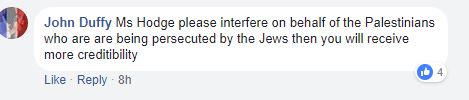
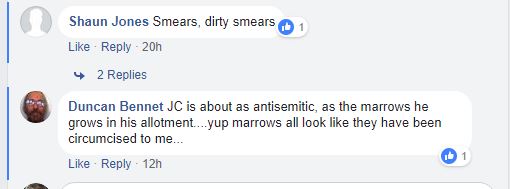
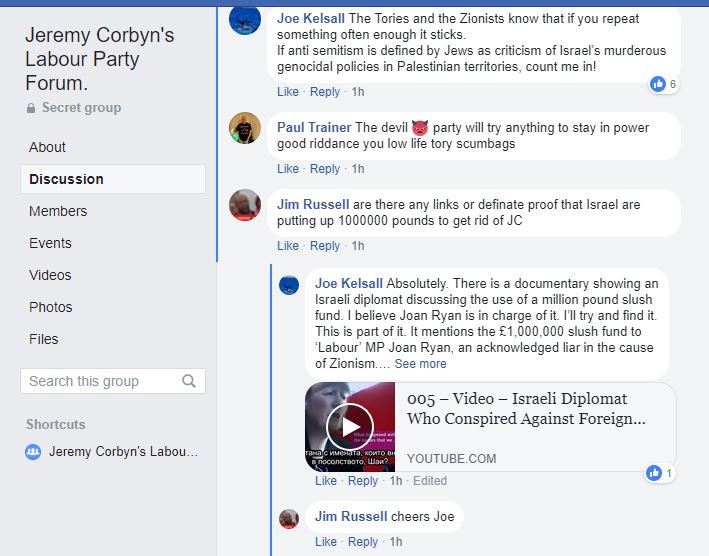
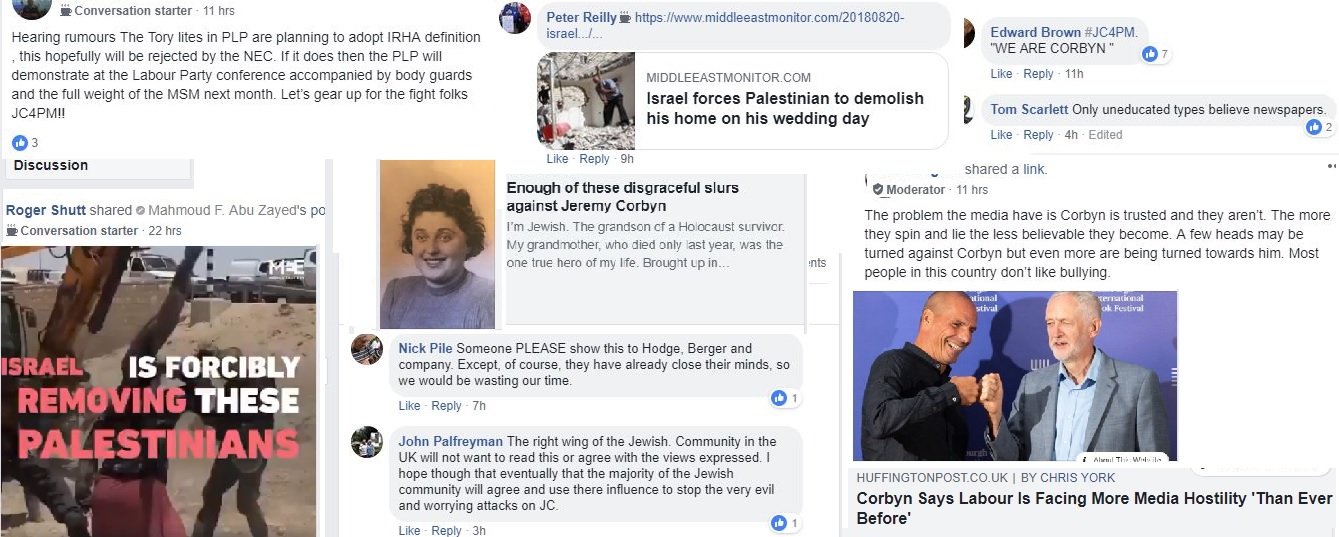
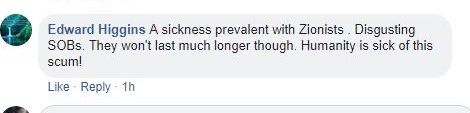
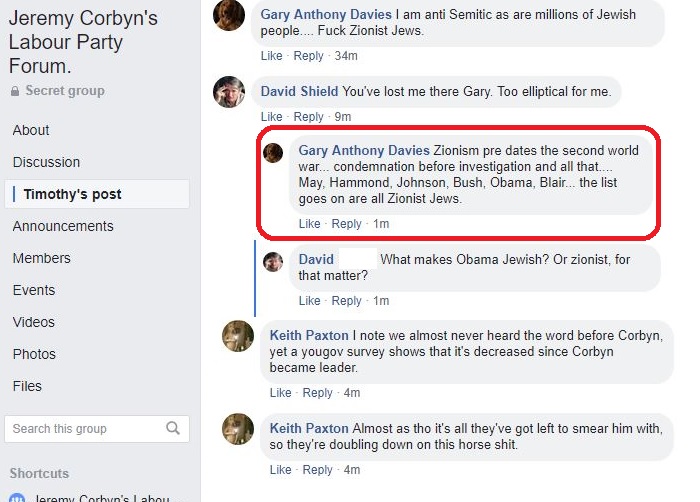
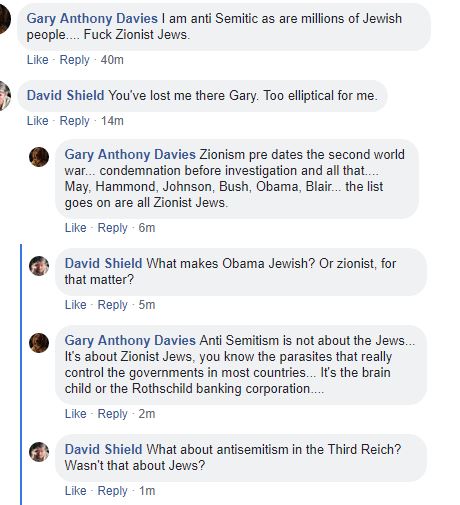
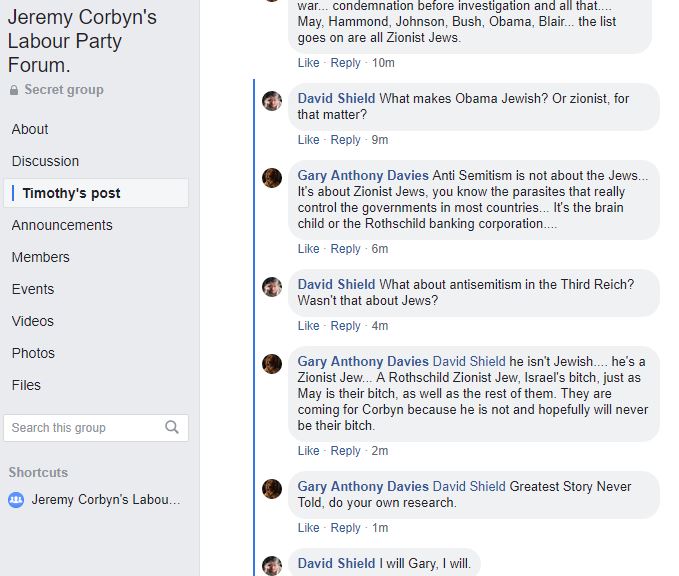
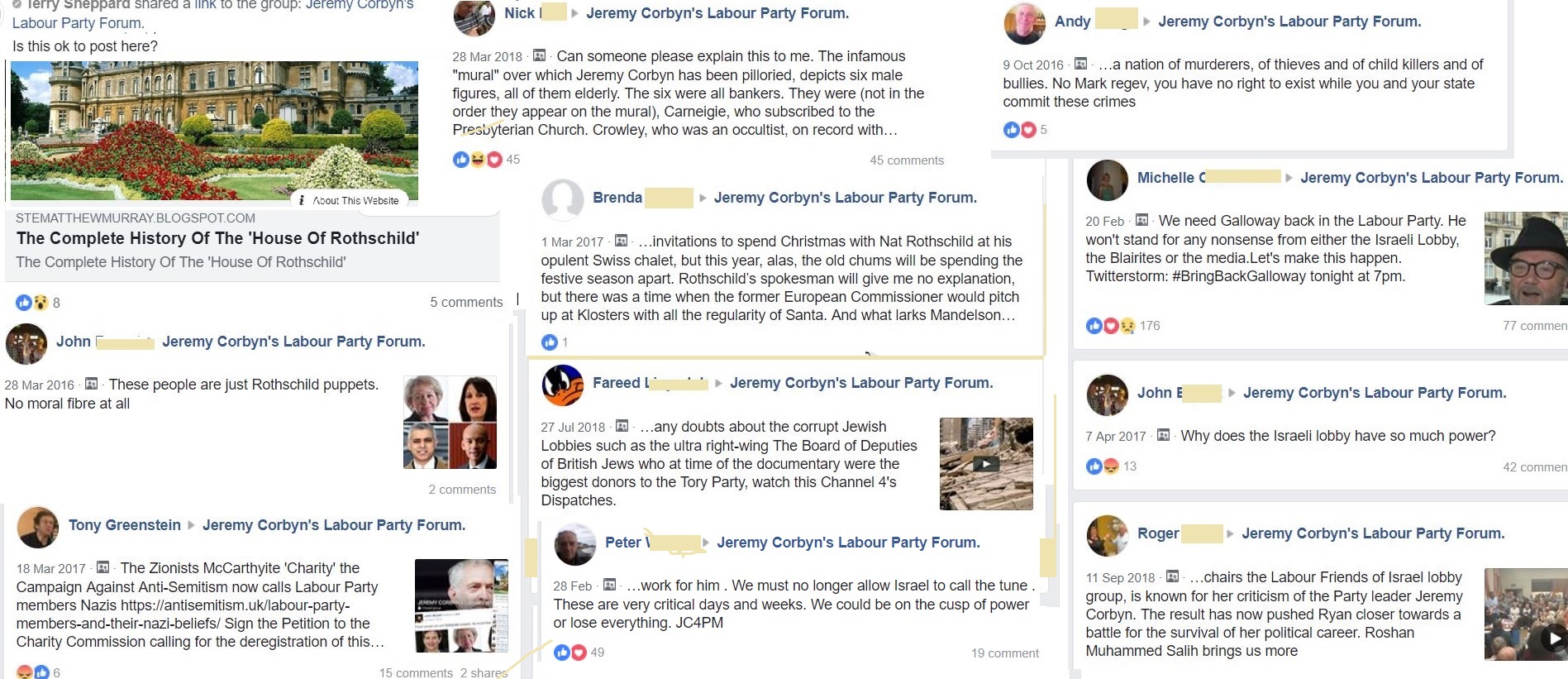
These are the comments from members of the group.
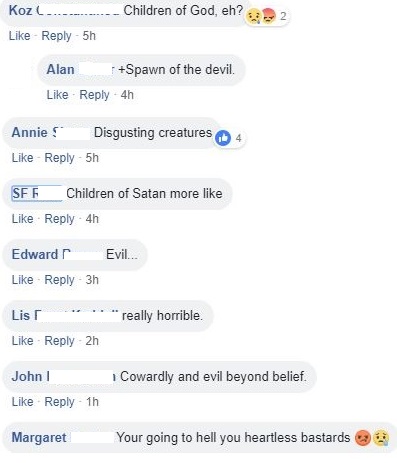
It is normal to feel rage and despair when we hear of atrocities. That is how I feel when I read about the Shoah, for example. In this case, members of the forum express outrage, but not one of them questions the accuracy of what they are told. Those who question such posts tend to be removed from the forum. I refrained from posting the report from Haaretz, to explain that the video, disturbing as it was, was not what they thought (an IDF sniper sadistically shooting a child to accompanying cheers). I assume that if I posted it I would be outing myself as what they generally call a ‘Zionist shill’ as well as less polite names. I would be ejected from the group and no longer able to report on it.
Videos and photos concerning Israel are posted every day on the forums, Al Jazeera’s The Lobby being the most popular. The result is always the same: righteous indignation combined with a sense of vindication that their Jew hatred has been right all along. There is also great anger about the so-called antisemitism smears. What do the Jews expect? After all, nobody likes an infanticide.
I continue to document the material on the one Labour forum from which I have not been ejected.
Sometimes I think of Oscar Wilde’s wallpaper in the Paris hotel bedroom and his last words in his last room before heaven.
‘This wallpaper is dreadful, one of us will have to go.’
This is how I feel about the phenomenon of Corbynist antisemitism. One of us will have to go. Let us hope that it’s them – may they go, peacefully from the UK Labour party, and may we still still be here, in ‘this other Eden’ which has been our home since 1656.
Diana and Jeremy
Posted on: August 20, 2018

As we approach August Bank holiday, I think of the death of Princess Diana, twenty-one years ago at this season. I remember the passionate grief in the United Kingdom and abroad, following the shock of her untimely death. No doubt the intensity of the public response was inspired by Diana’s superstar persona, beauty, philanthropy and transparent vulnerability. If any provocative journalist, presaging Katie Hopkins in courting opprobrium, suggested that Diana was neurotic, turbulent and not more than averagely intelligent, the response tended to be disgust and disbelief that anyone could fall so low as to as to write a negative opinion of the late princess.
No monarchist myself, I wept, read quantities of the Dianology then in print and watched all the television coverage. My daughters went up to Kensington Palace to lay flowers and my son, then fifteen, found a place to watch the passing of the funeral cortege. None of us was any kind of royal watcher. We supported Oliver Cromwell. Nevertheless, Diana was the archetype of the beautiful and good, dying young.
It all seems a very long time ago.
Last Friday, I watched the Channel 4 talk show The Last Leg, where Jeremy Corbyn was the butt of some quite edgy humour. He was represented by an actor as being naked in a tea cup but I need not explain the why and wherefore. Going by online responses, the fans were aghast, as they were in the face of Tracey Ullman’s comedy sketches lampooning Mr Corbyn, or David Baddiel’s remarks on the Frankie Boyle show.
My impression is that, for his most devoted supporters, Corbyn is Obi-Wan Kenobi, Gandalf and, despite the protestations of JK Rowling, Dumbledore. An old man with a beard should be wise, unless he compensates by coming down the chimney with presents – never a very wise choice. Corbyn is also seen as an older Jesus, if Jesus had not died at the age of thirty-three, even younger than Diana.
In common with Diana, Corbyn is a myth and a legend as much as a human being. Both are often perceived as martyrs and particularly as martyred by the press.
Corbyn is also loathed in a way Diana was not. He is associated with Jew hatred, more now than at the time of the General Election last year. He is regarded as hypocritical yet powerful in the context of the Labour Party where his close associates display a sometimes feral potency. To be on the wrong side of the Corbynistas seems unsafe within the Labour movement, with all the talk of deselection and, more so, the very insulting and belittling language used of political opponents by those supporters who have high visibility on social media.
The Queen has seldom aroused such strong devotion and neither did Churchill in his life time. If the Queen and Churchill were regarded as uplifting symbols of British life, they were not often more than incidental in the lives of the public.
Last year, during the Glastonbury Festival, Corbynmania was a word in all the newspapers. I have not heard it so much lately and it is possible that some of the Gandalfing of Corbyn has fallen away. In the last year, while his myth has been nurtured, he has not achieved very much, other than maintaining his support base and his leadership.
I, of course, have a horse in this race. I am Jewish and I do believe that the Corbyn movement is injurious to Jewish well-being. My view is precisely the one most loathed and derided by a significant number of Mr Corbyn’s supporters.
This elderly gentleman, resembling Diana perhaps in his prodigious obstinacy and middling intelligence, has aroused love and hate among the public more than any British politician in my lifetime. Enoch Powell would be in the running, but I don’t believe he was ever as popular as Corbyn.
No wonder we loved Diana. She harmed no one except herself.
Since Dame Margaret Hodge hit the headlines, the issue of antisemitism within Labour Party has continued to rage like a forest fire while Mr Corbyn’s role, for better for worse, has been hotly disputed. There have been two twitterstorms that I know of, one with the hashtag ‘We are Corbyn’ and the more recent with the hashtag ‘Resign Tom Watson.’
As readers will know, Tom Watson has condemned Labour antisemitism. Jeremy Corbyn’s supporters are sticking to their narrative that Tom Watson is dishonest and acting on behalf of those who want to keep Jeremy Corbyn out of 10 Downing Street. Online Labour Forums are running stories about Mr Watson being in the pay of Zionist Jews and I believe one Labour official has been suspended for saying as much.
A young man parried a tweet from the intrepid journalist Dan Hodges by claiming to be a Corbyn fan and a member of the Board of Deputies, to show that you can be both. The information that has reached me so far is that he’s the first thing but not the second so the conjunct, theoretically possible, doesn’t stand in this case.
I sometimes wonder, could we see off this recent (say half a century) burst of antisemitism at home and abroad if there were not Jewish people batting against us: Jewish Voice for Labour, Free Speech on Israel, the memeworthy Chomsky, the wrong type of Finkelstein (Norman) and the brocialists called Shlomo of whom there may be two or three.
The material on Labour forums is really not amusing. The flow of unreconstructed antisemitism is relentless, often prompted by posts from the group administrators if they think the topic of the Satan Katan* has been kicked into the long grass.
I’ve posted much of what I see on the Labour forums on my Twitter timeline. It is not possible to log in – which I do several times a day – without seeing extremely negative posts relating to Israel, Jews or, most prolifically in recent weeks, the so-called ‘smears’ about Labour antisemitism. There is often a smiling or winking emoji accompanying the words ‘Am I being antisemitic?’
They prize above all an encouraging word from a Jewish person, saying ‘No you’re not being antisemitic. It’s a lie told by…’ Zionists? Conservatives? The Deputy Labour leader? The PLP?
It does seem clear to me, in this fog of war, that being or not being Jewish is not a deciding factor in fighting antisemitism or coddling it. The friends, the journalists, the politicians who stand with us and pay the price for showing solidarity are not all Jewish. Most of them are not. It would be grim with no more than a quarter of a million of us in the UK if no one else had our backs.
So where this is leading is that I would like to thank all those who do have our backs, khasidei umot ha’olam חֲסִידֵי אֻמּוֹת הָעוֹלָם , the righteous among the nations. Like all the peoples of the world, we can’t do it all alone. Nobody can.
- Little Satan
6 August 2018
Don’t Drink the Tizer
Posted on: July 27, 2018
I wrote a piece about my Mum which I was going to blog but in the last few days, I get the impression that some of the people kind enough to read my words are not necessarily well-disposed. Bearing this in mind, I’ll refrain from saying much about my Mum’s quiet personality or her characteristic phraseology, but I’ll just say this.
She died last year, aged 98. A few months before she died, she was interviewed by Owen who was working on a Memory-Sharing App for later life and I was present at the interview. I had expected that my mother would want to talk about family, her childhood in London’s East End, her seventy years marriage to my Dad and probably a bit about the blitz in London, because she was under the table with my sister as the bombs were falling.
Unexpectedly, she talked a lot about Oswald Mosley.
‘It was very hard when Mosley came,’ she said.’They were fascists, you know. It was frightening.’
Owen encouraged her to speak of her childhood, and she mentioned her father’s workshop where she and her siblings worked as sewing machinists. Her memory was stimulated, which was no doubt one of the goals of the memory sharing project. I noticed with some surprise how she kept coming back to the topic of Mosley, who must, I supposed, have been small beer compared with living through the blitz while my father was away at war, having his own very close shaves.
When I was a child in the 1950s, my parents, grandparents, aunts and uncles wouldn’t let us children buy Tizer, a very popular fizzy drink because, they explained, Oswald Mosley was a shareholder.
After the war, Mosley targeted principally the recent immigrants of the Windrush generation, through his League of Empire Loyalists, which eventually morphed into the National Front. He stood for Parliament in 1966, in Shoreditch and Finsbury. Aged sixteen, I heckled with left wing friends at his meeting and was frogmarched out by two policemen, undoubtedly for my own good. My grandfather made me recount the event more than once to his friends who came round to play cards. He was so proud.
There was also Colin Jordan’s National Socialist Movement in the 1960s which became the British Movement under John Tyndall.
These neonazi extremists, they have their moment for causing fear and fury and then they return to obscurity, sometimes reaching out from the shadows to make a kill, the tragic death of Jo Cox MP being a case in point.
In the mid-twentieth century, the parents taught us diligently not to drink Tizer and we grew up knowing about the crazy ideas the ‘Fascists’ harboured about us Jews (the word fascists was used then more commonly than neonazis), their belief in our uncanny power and immeasurable wealth.
Every decade, people are more enlightened than the decade before. When I was a child, capital punishment and flogging existed in English law; male homosexuality was illegal; racist and homophobic discourse were run of the mill. I must add that my parents, born before 1920, despised racism and homophobia. They were not judgmental about sexuality. They boycotted South African fruit. And they wouldn’t let us drink Tizer.
Now I tire my adult children with my worries about the return of antisemitism. They think this trouble in the Labour Party will pass. They tend to agree that there is a problem, but they don’t believe it will have the power to harm us. Fair enough.
Perhaps it was living through the war that made my parents fearful, or being born soon after the war which has made me jittery.
In the 1970s, I saw a leaflet which some obscure far right group had posted through letter boxes in Bloomsbury. I read it and saw that it was mad. They asserted that Churchill was Jewish, Harold Wilson was Jewish and that Jews, naturally, are the evil masters of all they survey.
It’s only the third of those assertions that I see, when trawling Labour forums, in this year of 2018.
One other thing I see on Labour forums – and this is a gambit that Mosley never came up with – is the assertion that antisemitism doesn’t exist, not on the left. It is believed to be a trick that Jews play, for unlawful gain. They post memes to this effect, which I can see in my mind’s eye as I type this.
Perhaps those inappropriate posts from individuals who have, to greater or lesser extent associated themselves with the Labour Party (some are members, some are not and some hold office in the Labour Party), perhaps they too will pass. Perhaps the Key Stage 4 history resources will describe how Labour encountered a problem with antisemitism in the twenty tens and nipped it in the bud.
In my previous blog, I quoted Camus, ‘the plague bacillus never dies or disappears for good’.
Let us be alert to the symptoms, wherever we find them.
27 July 2018
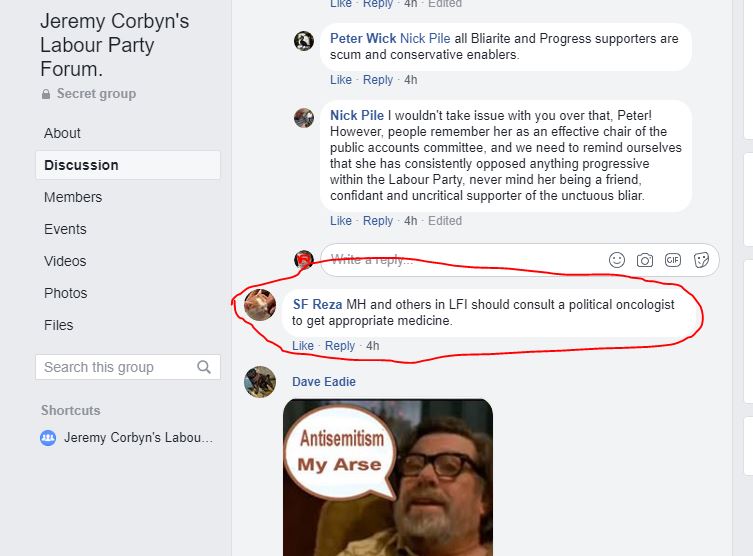
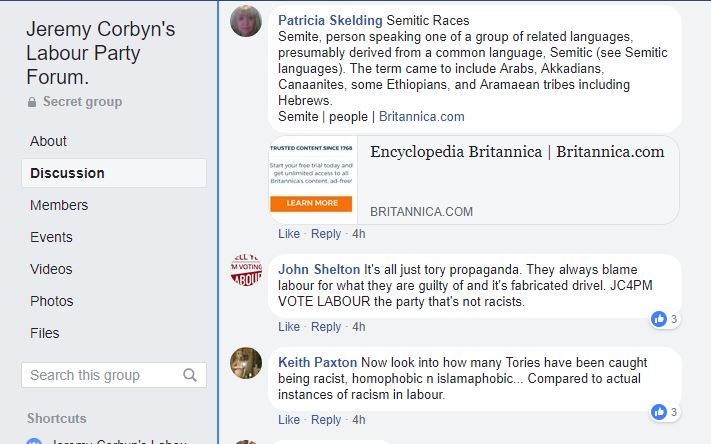
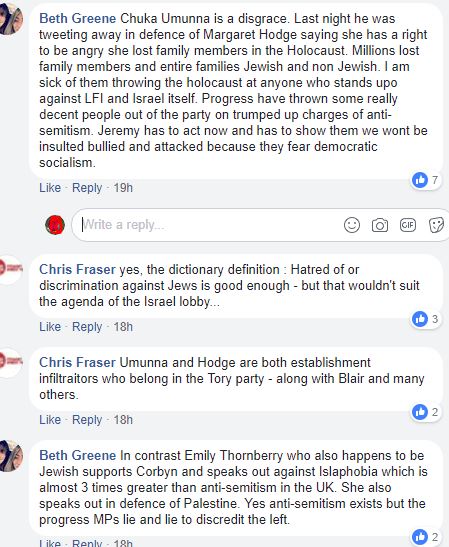
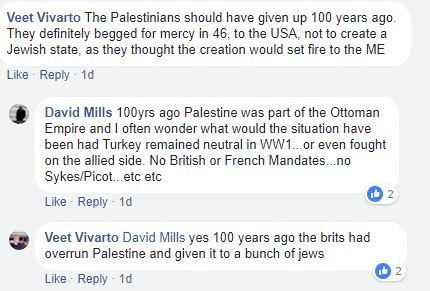
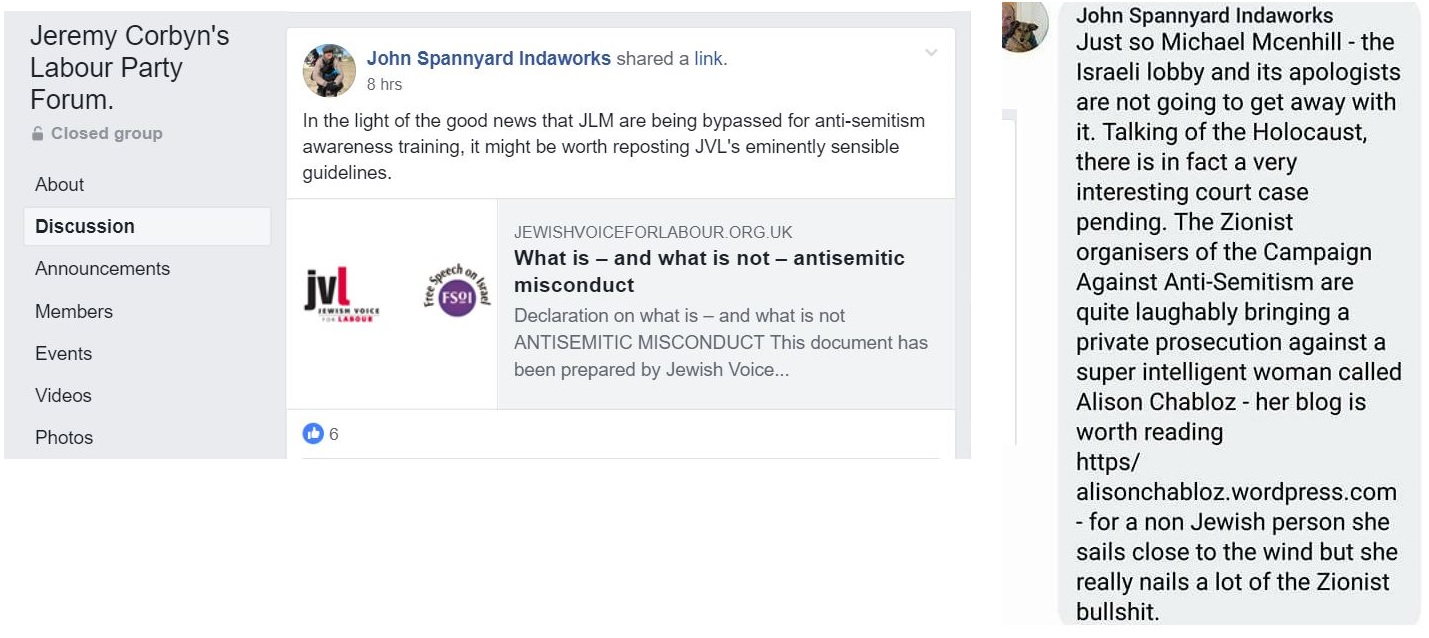
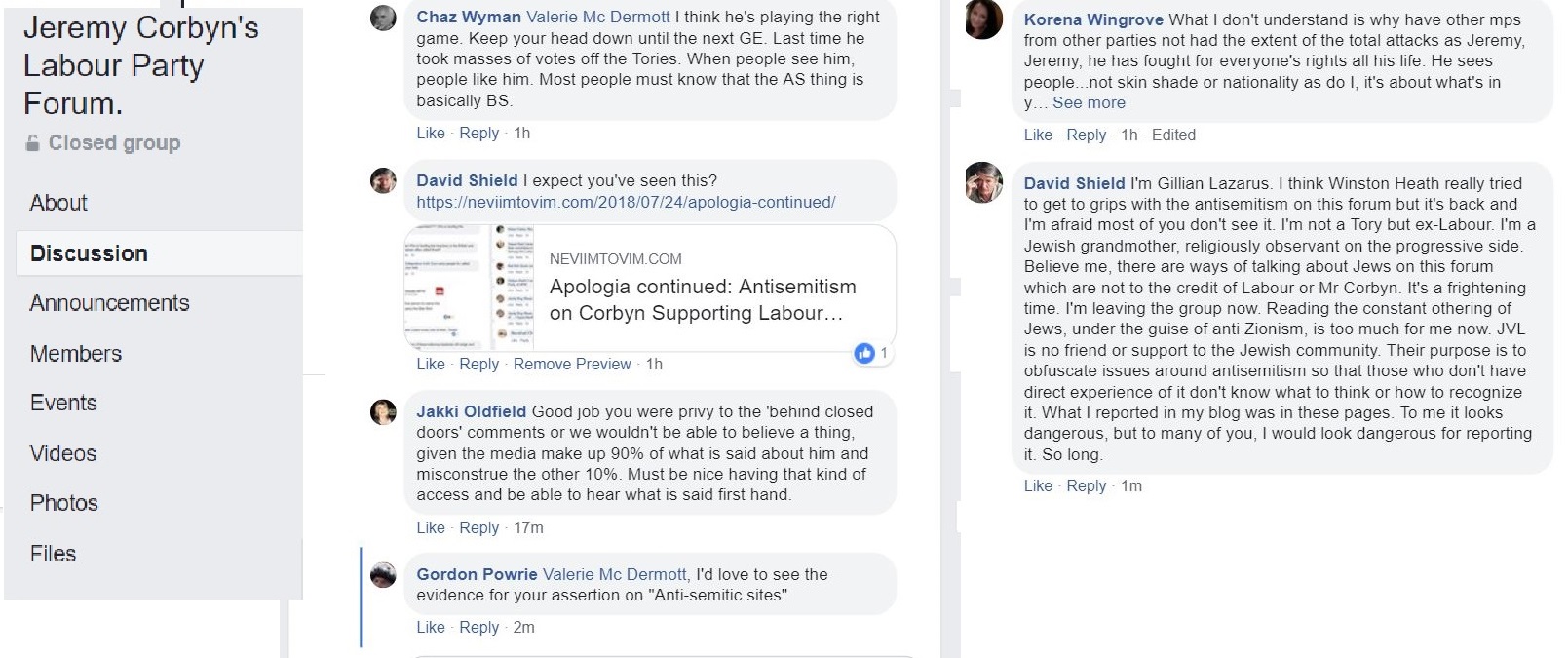
I added many screen shots to this post over a period of months and am dispensing with most of my introductory observations so that the reader can cut to the chase, as it were.
It is never up to date as every day brings new material .
As before, I emphasize it is the way that Israel is criticized that is problematic. One can hardly even call it criticism. Often, the language segues seamlessly into classical antisemitism.
I thought we had left all this behind in the twentieth century.
Albert Camus said:
… le bacille de la peste ne meurt ni ne disparaît jamais, qu’il peut rester pendant des dizaines d’années endormi dans les meubles et le linge, qu’il attend patiemment dans les chambres, les caves, les malles, les mouchoirs et les paperasses, et que, peut-être, le jour viendrait où, pour le malheur et l’enseignement des hommes, la peste réveillerait ses rats et les enverrait mourir dans une cité heureuse.*
…the plague bacillus never dies or disappears for good; that it can lie dormant for years and years in furniture and linen-chests; that it bides its time in bedrooms, cellars, trunks and bookshelves; and that perhaps the day would come when, for the bane and the enlightening of men, it would rouse up its rats again and send them forth to die in a happy city.















During the Kishinev pogrom at Easter 1903, a mob armed with kitchen and farming implements burst into the cottage of Yehezkiel the Presser. Approaching Yehezkiel with his hatchet raised, Bogdan took the time to ask him a question: ‘Who killed Jesus?’
Yehezkiel’s wife and daughters had climbed out on to the roof and he hoped that they might make a getaway, so he played for time.
‘First of all,’ he said, ‘I think the answer to your question is the Romans. That Pilate, he was the one. All right, I know he wasn’t happy with the judgment. I know he went full Lady Macbeth with the washing of hands. You can blame the burden of governance if you like.’
Bogdan’s response came quickly as he swung his hatchet.
‘You killed Jesus,’ he said.
‘Here’s another thing,’ replied Yehezkiel. ‘The events you’re referring to, they’re not recent. By my calculations, they happened – what? Eighteen hundred and seventy years ago. Well, I’m fifty three, Bogdan. I wasn’t there. You know that as well as I do.’
‘Christ killer,’ answered Bogdan. ‘Child murderer.’
‘Believe me,’ Yehezkiel assured him, ‘I have every admiration for Jesus, whom you call Christ. It’s just a pity he didn’t write it all down himself because those biographers, you know, one of them says it’s Thursday and another one says it’s dinner time. Four evangelists, forty opinions. So I hear. But this was all far away, as well as long ago. Wonderful climate, they tell me, in the Holy Land. Not like Bessarabia. Brrr. The winter we had. Have you got cherries yet in your orchard? No? Well it’s early days.’
Bogdan was now inches away. You might say that he eyeballed Yehezkiel but he was so much taller, he would have had to crouch to do any serious eyeballing.
‘Admit you killed Jesus,’ he advised Yehezkiel.
I’d be lying if I told you Yehezkiel didn’t consider saying it. Who knows? Bogdan might then spare his life. Or not. The point was, Bogdan had brought a crowd with him and Yehezkiel didn’t want to give them the wrong idea, so he said, ‘This I did not do.’
Bogdan then deployed his hatchet so thoroughly that Yehezkiel had no opportunity to say ‘Shema Yisrael’.
He died. By some miracle, his wife and daughters got away.
*
You can no more say ‘This isn’t about Israel’ than Yehezkiel could say ‘It isn’t about the crucifixion’. Antisemites tend to be be the adjudicators of what this is about. You can say ‘The Romans did it and besides, I wasn’t there.’ You can say that Israel doesn’t bear all the guilt and besides, I’m not there. Or you can say, as some do, ‘Israel has all the power and bears all the guilt so I repudiate it.’ Historically, those who converted were allowed to live. If you are living and working in a milieu where Israel is considered the supreme evil, you might think that the right thing is to cut yourself loose from its rocky embrace.
You might decide that the New Testament supersedes the Old Testament and that converting is the righteous way. I’m the first to agree that the Christian scriptures are beautiful; well, second, if you count Yehezkiel; third really, because of Rabbi Lionel Blue. In the medieval disputations, there were Franciscan and Dominican friars who in childhood had benefited from an education at the Talmud Torah but, following conversion to Christianity, became fierce adversaries of Jews and Judaism.
Apostasy happens in modern times too. Israel Zolli who was the Chief Rabbi of Rome in 1945 was baptized and chose the name Eugenio in honour of Pope Pius XII, a controversial pope if ever there was one.
Renouncing and denouncing Israel is not quite apostasy. You can make a religious case against Zionism, as Neturei Karta and others have done.
This is where I get controversial. When you denounce Israel, Eugenio Zolli is watching with approval. Pablo Christiani and Nicholas Donin extend their ghostly hands to you. And maybe – but maybe not – Bogdan lets you live. But do we want their reprieves?
As for me, I’m a voter, like everyone else; the decisions of the Israeli government and the UK government are not my decisions and not necessarily what I voted for, but I want to be able to express pride in the two countries which are, in a sense, my two parents: England, the land of my birth and Israel, who engendered me.
Rarely a day passes without someone – and very often it’s someone declaring their support for Mr Corbyn – without someone saying to me ‘But what about Israel. They did this and they do that and you’re complicit.’ It’s a fact that I’ve only ever been called a murderer since opening a Twitter account.
In one way, they are right. They say that this question of Labour antisemitism is all about Israel, and it is. In the way that the Kishinev pogrom was about the crucifixion, Labour antisemitism is about Israel. From their point of view, Zionism is the πρῶτον κινοῦν ἀκίνητον or primus motor, the uncaused cause of many ills.
I don’t buy that.
Post script 10 April 2019
It looks as if Mr Netanyahu has just won a fifth term as Israeli Prime Minister. I’m sorry that a more centrist politician won’t be forming a government for numerous reasons including hopes of peace, a more liberal agenda and also because of the opprobrium attached to Bibi in the UK, the country where I cast my own vote. I doubt though that the anti-Zionists would like Benny Ganz any better. Either way, I refrain from adding ‘Zionist’ to my Twitter bio. Why should I give Bogdan a GPS tracker to my account?
I’m accustomed to elections being disappointments. Barring the early wins of Tony Blair and Barak Obama, they never seem to deliver what I want. Come what may, I do feel bound to Israel and to Britain, both of them; for better for worse, for richer for poorer, in sickness and in health, as long as we both shall live. ב”ה
A second post script, 4 June 2020. Someone on Twitter last night tried to prove his left wing (and, as it happens, IRA) credentials by calling me ‘apratheid [sic] supporting, innocent killing, Jesus murdering, uuuuuuuuultra [sic] right wing fucking filth’. I’d annoyed the man by blocking him. What can one do? Not much. Hopefully, while that’s going on, someone else is getting away over the roof.
Apologia Pro Screen Shots Meae
Posted on: July 17, 2018
This blog has been almost entirely on biblical subjects, give or take a post or two. The less than catchy name of the blog, Neviim Tovim means ‘good prophets’ and is taken from the prescribed blessing before reading aloud in the synagogue a text from the prophetic books.
For the last year or maybe eighteen months, I’ve been observing some of the closed online Labour forums and reporting, mainly through Twitter on the copious antisemitism I see there.
I have watched, during the leadership of Mr Corbyn, an intense outpouring of demonisation and hatred towards Israel from supporters of the Labour Party and on online Labour sites. There is no respite from this outpouring, never for a day and seldom for an hour.
This week, the Labour leadership’s tweaking of the IHRA definition of antisemitism has been so controversial that all but four Labour MPs voted against the changes at their PLP meeting. A miracle occurred in that rabbis of all denominations came together to sign a letter in the Guardian, urging the Labour Party to drop the changes.
The amendments to the definition, as proposed by the Labour leadership, make it acceptable to equate Israelis with Nazis, to deny the right of Israel to exist and to demand a higher standard from Israel than from other countries.
The sixty or so stalwarts of Jewish Voice for Labour, also comprising Free Speech on Israel, have been accepted by Mr Corbyn as representative of Jewish opinion. They are fiercely anti-Zionist and dismissive of most of Anglo-Jewry’s fears of Labour antisemitism, which they say are based on a political agenda of defending Israel right or wrong. This agenda, they say, has caused Jeremy Corbyn to become the target of concerted Jewish action which, in their view, is designed entirely to silence criticism of Israel.
So we always come back to Israel, even if we are as ‘Meh’ about the Jewish state as David Baddiel declared himself to be.
On Labour forums, arguments run like this. Israel kills Palestinians for sadistic sport. They target children and pregnant women in particular. They prevent goods from passing through to Gaza, thus causing starvation and genocide. They desire territorial expansion as far as the Caspian Sea. They suborn or bribe the governments of the West, especially the USA and the UK. They have secret lobbies in industry and they own international banking cartels.
It is some years since I studied the rise of Nazism and the reason why I am up to date with these theories is that I read Labour forums every day. These are sometimes closed forums and one has to assure the administrators that one is loyal to Mr Corbyn. Membership of the forum I currently belong to is around sixteen thousand. There are some larger forums than these, but I have been ejected, after disputing the above perceptions of Israel. Silence is golden.
Now, we come back to the matter of Jews. Rarely will the members of the groups express hatred of Jews as such. They speak of the influence and power of the Rothchilds, the Bauers, the New World Order, Bilderberg, Illuminati, the Elite, the Puppet Masters. They select Jewish individuals in public life, MPs, actors, celebrities and assert that they are paid propagandists for Israel. If one of these notable persons speaks of Labour antisemitism, they are said to be in the pay of Israel. If a member of the forum disagrees, the response is that they are in the pay of Israel. If a member of the forum agrees with an MP like Chuka Umunna, who is very supportive of the Jewish community in our struggle against antisemitism, they are said to be paid Tory Zionist trolls. The animus towards MPs like Tom Watson and Jess Phillips is horrible to behold. Any politician who admits that Labour has a problem with antisemitism becomes a hate figure on the forums. This is even true of Jon Lansman who is less than ‘meh’ about Israel.
Esteemed figures on the forums are George Galloway, Ken Livingstone, Ken Loach, Chris Williamson, Dennis Skinner, John McDonnell (not as much as you’d think) and of course The Absolute Boy himself (as much as you’d think).
Memes are posted constantly, often displaying leaders like Mandela, Gandhi and Martin Luther King, accompanied by anti-Israel texts of uncertain provenance. Equally favoured are pictures of Jewish individuals with a quotation to the effect that the concept of antisemitism is a ruse used by Jews to gain unfair advantage.
Now, I’m working towards my conclusion and the one and only screen shot which will accompany this post.
On the forums, there are very many pictures showing human suffering, accompanied by texts explaining that Israel is the perpetrator. Images may be taken from newsreels around the world. Occasionally they are clips taken from feature films. The suffering person is always said to be a Palestinian while the one inflicting the suffering is said to be Israeli, or, on days when the members are particularly emboldened, Jewish.
No one likes to see such images and they arouse great anger on the forums. Comments get posted, likening Israelis to vermin, Nazis and monsters. Sometimes it is mentioned that they have had this capacity for evil since time immemorial: the Rothschilds and the Jewish bankers causing the two world wars for financial profit; Mossad managing the assassination of President Kennedy, the sinking of the Titanic, the slave trade and of course the crucifixion. The Israelis, you understand, because these Labour supporters are not antisemitic and anyway, someone will explain almost daily, semites are Palestinians and Jews are European colonialists – the Khazars.
At last came the straw that broke the camel’s back, where I’m the camel. There was a thread supporting the boycott of Israel on the basis of Israel’s unparalleled wickedness. I posted a link to an article about Israel’s assistance in the international operation to rescue the boys trapped in a cave in Thailand. I braced for the abuse which would follow.
It didn’t follow. The Administrators had deleted my link. It was not considered appropriate for the eyes of the forum’s members.
I did not question this. I keep fairly quiet in these groups; I keep my head down and I’m still there. I use the name Galil Perssimann. Watch this space.

Post script. I was ejected from Labour Party Forum today, 16 August, having engaged on the subject of antisemitism. A link to this blog was produced, followed by the sentence above, where I reveal the name I use on the forum. I feel a little like Andy Dufresne after he came out of the sewer. In any case, it was a fair cop.
- In: Pentateuch | Torah
- Leave a Comment
 Deuteronomy 27: 9 – 26 Ki Tavo
This event takes place towards the end of the forty years in the wilderness and in the last days of Moses’ life. Moses prepares the Israelites for their new life after his own death, in the promised land, under the leadership of Joshua.
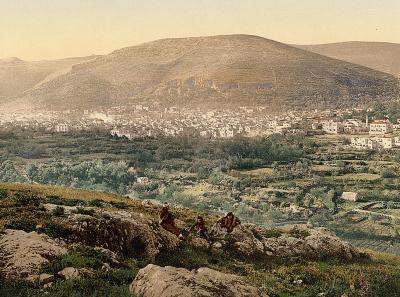
He then delineates a ceremony of blessings and curses which will take place after the Israelites have crossed the Jordan, at which time Moses will no longer accompany them. The leadership will have passed to Joshua. The tribes will be divided into two groups. Six tribes are to stand on Mount Gerizim, to the south, and pronounce blessings. The other six are to stand on Mount Ebal, north-east, and pronounce curses. The tribes sent to Gerizim are Simeon, Levi, Judah, Issachar, Joseph and Benjamin. The tribes who have the unfortunate job of presiding over the curses are Reuben, Gad, Asher, Zebulun, Dan and Naphtali. The curses are spoken by Levites who anathemize those who make graven images; those who treat their parents badly; those who move a neighbour’s landmark; those who lead the blind astray; those who subvert the cause of widows and orphans; those who sleep with their father’s wife, with their sister, or their mother-in-law; those who have sex with an animal, those who commit physical assault in secret, paid assassins and those who do not adhere to these commandments.
There are twelve curses, matching the number of the tribes.
Mount Ebal is in biblical Shechem, now Nablus on the West Bank.
There are several questions raised by the text and not answered. Why are the curses issued from Mount Ebal, which later became the site of an Israelite altar, constructed from stones? Why are the blessings from Mount Gerizim, which later became the Sanctuary of the Samaritan sect?
Some commentators – Samson Raphael Hirsch for example – reasoned that Gerizim was fertile and Ebal rugged. In the thirteenth century, Nachmanides noted that as Gerizim, was to the south, it was at the right hand when one faced east to pray. It’s also suggested that the southern position of Gerizim placed it in the territory of Judah while Ebal stood in what was to become the Northern Kingdom.
As for the Samaritan view of the sanctity of Gerizim, this is somewhat backed up by a passage in the Dead Sea Scrolls version of Deuteronomy, which says:
When you have crossed the Jordan, you shall set up these stones, about which I charge you today, on Mount Gerizim, and coat them with plaster. And there, you shall build an altar to the Lord your God.
The verse in the Masoretic text, that’s the chumash you may have in front of you, and in our Sefer Torah, says:
And when you have crossed over the Jordan, you shall set up these stones, concerning which I command you today, on Mount Ebal, and you shall plaster them with plaster. (Deuteronomy 27:4)
Then there’s the question of who were Samaritans. The name comes from Shomrim, meaning keepers or guards, just as the geographical area of Samaria is called Shomron in Hebrew. They claim descent from the tribes of Ephraim and Manasseh and split with mainstream Israelite observances by locating their sanctuary on Mount Gerizim. At that time, the period of the judges, the official sanctuary was in Shiloh. The Samaritans have their own version of the Pentateuch, written in a script resembling palaeo-Hebrew and containing mostly minor but numerous variations from our Masoretic text. We don’t know the age of the Samaritan pentateuch, but some of these variations occur likewise in the Dead Sea Scrolls and the Greek Septuagint, so it’s old, perhaps from the time of the Second Temple. The Samaritans don’t count the prophets or the hagiographa – the Ketuvim – as scriptural. They just have the five books of the chumash.
Now there’s another question without any definite answer, relating to this Torah reading. How were the tribes divided? What did it signify, if your tribe was doing the blessings from Gerizim or the curses from Ebal? It seems to me that the tribes doing the blessing, Simeon, Levi, Judah, Issachar, Joseph and Benjamin are the A list, with the possible exception of Issachar. Those standing on Mount Ebal are Reuben, Gad, Asher, Zebulun, Dan and Naphtali. The tribes of Dan, Naphtali, Gad and Asher were descended from Jacob’s concubines, Bilhah and Zilpah. Reuben and Zebulun are the oldest and youngest sons of Leah. It is also interesting that the descendants of the Ebal tribes are less notable than the royal, priestly and messianic issue of the Gerizim tribes.
According to my counting, twelve curses are to be uttered on Mount Ebal and, as you will hear, a dozen times it is repeated that all the people will say Amen. Their peoplehood is expressed in the unity with which they accept the Torah of Moses and shun the ways which are forbidden, cursed. As you know, the word ‘amen’ is connected with the word for faith, emunah, but it has traveled a long way, as it appears in the Greek of the New Testament and is used in Muslim prayer with the same meaning. I find there is something a bit magical about the word Amen. Listen to it, as it’s repeated in out Torah reading, from Deuteronomy 27.

