Archive for the ‘Uncategorized’ Category
Apologia Pro Screen Shots Meae
Posted on: July 17, 2018
This blog has been almost entirely on biblical subjects, give or take a post or two. The less than catchy name of the blog, Neviim Tovim means ‘good prophets’ and is taken from the prescribed blessing before reading aloud in the synagogue a text from the prophetic books.
For the last year or maybe eighteen months, I’ve been observing some of the closed online Labour forums and reporting, mainly through Twitter on the copious antisemitism I see there.
I have watched, during the leadership of Mr Corbyn, an intense outpouring of demonisation and hatred towards Israel from supporters of the Labour Party and on online Labour sites. There is no respite from this outpouring, never for a day and seldom for an hour.
This week, the Labour leadership’s tweaking of the IHRA definition of antisemitism has been so controversial that all but four Labour MPs voted against the changes at their PLP meeting. A miracle occurred in that rabbis of all denominations came together to sign a letter in the Guardian, urging the Labour Party to drop the changes.
The amendments to the definition, as proposed by the Labour leadership, make it acceptable to equate Israelis with Nazis, to deny the right of Israel to exist and to demand a higher standard from Israel than from other countries.
The sixty or so stalwarts of Jewish Voice for Labour, also comprising Free Speech on Israel, have been accepted by Mr Corbyn as representative of Jewish opinion. They are fiercely anti-Zionist and dismissive of most of Anglo-Jewry’s fears of Labour antisemitism, which they say are based on a political agenda of defending Israel right or wrong. This agenda, they say, has caused Jeremy Corbyn to become the target of concerted Jewish action which, in their view, is designed entirely to silence criticism of Israel.
So we always come back to Israel, even if we are as ‘Meh’ about the Jewish state as David Baddiel declared himself to be.
On Labour forums, arguments run like this. Israel kills Palestinians for sadistic sport. They target children and pregnant women in particular. They prevent goods from passing through to Gaza, thus causing starvation and genocide. They desire territorial expansion as far as the Caspian Sea. They suborn or bribe the governments of the West, especially the USA and the UK. They have secret lobbies in industry and they own international banking cartels.
It is some years since I studied the rise of Nazism and the reason why I am up to date with these theories is that I read Labour forums every day. These are sometimes closed forums and one has to assure the administrators that one is loyal to Mr Corbyn. Membership of the forum I currently belong to is around sixteen thousand. There are some larger forums than these, but I have been ejected, after disputing the above perceptions of Israel. Silence is golden.
Now, we come back to the matter of Jews. Rarely will the members of the groups express hatred of Jews as such. They speak of the influence and power of the Rothchilds, the Bauers, the New World Order, Bilderberg, Illuminati, the Elite, the Puppet Masters. They select Jewish individuals in public life, MPs, actors, celebrities and assert that they are paid propagandists for Israel. If one of these notable persons speaks of Labour antisemitism, they are said to be in the pay of Israel. If a member of the forum disagrees, the response is that they are in the pay of Israel. If a member of the forum agrees with an MP like Chuka Umunna, who is very supportive of the Jewish community in our struggle against antisemitism, they are said to be paid Tory Zionist trolls. The animus towards MPs like Tom Watson and Jess Phillips is horrible to behold. Any politician who admits that Labour has a problem with antisemitism becomes a hate figure on the forums. This is even true of Jon Lansman who is less than ‘meh’ about Israel.
Esteemed figures on the forums are George Galloway, Ken Livingstone, Ken Loach, Chris Williamson, Dennis Skinner, John McDonnell (not as much as you’d think) and of course The Absolute Boy himself (as much as you’d think).
Memes are posted constantly, often displaying leaders like Mandela, Gandhi and Martin Luther King, accompanied by anti-Israel texts of uncertain provenance. Equally favoured are pictures of Jewish individuals with a quotation to the effect that the concept of antisemitism is a ruse used by Jews to gain unfair advantage.
Now, I’m working towards my conclusion and the one and only screen shot which will accompany this post.
On the forums, there are very many pictures showing human suffering, accompanied by texts explaining that Israel is the perpetrator. Images may be taken from newsreels around the world. Occasionally they are clips taken from feature films. The suffering person is always said to be a Palestinian while the one inflicting the suffering is said to be Israeli, or, on days when the members are particularly emboldened, Jewish.
No one likes to see such images and they arouse great anger on the forums. Comments get posted, likening Israelis to vermin, Nazis and monsters. Sometimes it is mentioned that they have had this capacity for evil since time immemorial: the Rothschilds and the Jewish bankers causing the two world wars for financial profit; Mossad managing the assassination of President Kennedy, the sinking of the Titanic, the slave trade and of course the crucifixion. The Israelis, you understand, because these Labour supporters are not antisemitic and anyway, someone will explain almost daily, semites are Palestinians and Jews are European colonialists – the Khazars.
At last came the straw that broke the camel’s back, where I’m the camel. There was a thread supporting the boycott of Israel on the basis of Israel’s unparalleled wickedness. I posted a link to an article about Israel’s assistance in the international operation to rescue the boys trapped in a cave in Thailand. I braced for the abuse which would follow.
It didn’t follow. The Administrators had deleted my link. It was not considered appropriate for the eyes of the forum’s members.
I did not question this. I keep fairly quiet in these groups; I keep my head down and I’m still there. I use the name Galil Perssimann. Watch this space.

Post script. I was ejected from Labour Party Forum today, 16 August, having engaged on the subject of antisemitism. A link to this blog was produced, followed by the sentence above, where I reveal the name I use on the forum. I feel a little like Andy Dufresne after he came out of the sewer. In any case, it was a fair cop.
- In: Pentateuch | Torah
- Leave a Comment
 Deuteronomy 27: 9 – 26 Ki Tavo
This event takes place towards the end of the forty years in the wilderness and in the last days of Moses’ life. Moses prepares the Israelites for their new life after his own death, in the promised land, under the leadership of Joshua.
He then delineates a ceremony of blessings and curses which will take place after the Israelites have crossed the Jordan, at which time Moses will no longer accompany them. The leadership will have passed to Joshua. The tribes will be divided into two groups. Six tribes are to stand on Mount Gerizim, to the south, and pronounce blessings. The other six are to stand on Mount Ebal, north-east, and pronounce curses. The tribes sent to Gerizim are Simeon, Levi, Judah, Issachar, Joseph and Benjamin. The tribes who have the unfortunate job of presiding over the curses are Reuben, Gad, Asher, Zebulun, Dan and Naphtali. The curses are spoken by Levites who anathemize those who make graven images; those who treat their parents badly; those who move a neighbour’s landmark; those who lead the blind astray; those who subvert the cause of widows and orphans; those who sleep with their father’s wife, with their sister, or their mother-in-law; those who have sex with an animal, those who commit physical assault in secret, paid assassins and those who do not adhere to these commandments.
There are twelve curses, matching the number of the tribes.
Mount Ebal is in biblical Shechem, now Nablus on the West Bank.
There are several questions raised by the text and not answered. Why are the curses issued from Mount Ebal, which later became the site of an Israelite altar, constructed from stones? Why are the blessings from Mount Gerizim, which later became the Sanctuary of the Samaritan sect?
Some commentators – Samson Raphael Hirsch for example – reasoned that Gerizim was fertile and Ebal rugged. In the thirteenth century, Nachmanides noted that as Gerizim, was to the south, it was at the right hand when one faced east to pray. It’s also suggested that the southern position of Gerizim placed it in the territory of Judah while Ebal stood in what was to become the Northern Kingdom.
As for the Samaritan view of the sanctity of Gerizim, this is somewhat backed up by a passage in the Dead Sea Scrolls version of Deuteronomy, which says:
When you have crossed the Jordan, you shall set up these stones, about which I charge you today, on Mount Gerizim, and coat them with plaster. And there, you shall build an altar to the Lord your God.
The verse in the Masoretic text, that’s the chumash you may have in front of you, and in our Sefer Torah, says:
And when you have crossed over the Jordan, you shall set up these stones, concerning which I command you today, on Mount Ebal, and you shall plaster them with plaster. (Deuteronomy 27:4)
Then there’s the question of who were Samaritans. The name comes from Shomrim, meaning keepers or guards, just as the geographical area of Samaria is called Shomron in Hebrew. They claim descent from the tribes of Ephraim and Manasseh and split with mainstream Israelite observances by locating their sanctuary on Mount Gerizim. At that time, the period of the judges, the official sanctuary was in Shiloh. The Samaritans have their own version of the Pentateuch, written in a script resembling palaeo-Hebrew and containing mostly minor but numerous variations from our Masoretic text. We don’t know the age of the Samaritan pentateuch, but some of these variations occur likewise in the Dead Sea Scrolls and the Greek Septuagint, so it’s old, perhaps from the time of the Second Temple. The Samaritans don’t count the prophets or the hagiographa – the Ketuvim – as scriptural. They just have the five books of the chumash.
Now there’s another question without any definite answer, relating to this Torah reading. How were the tribes divided? What did it signify, if your tribe was doing the blessings from Gerizim or the curses from Ebal? It seems to me that the tribes doing the blessing, Simeon, Levi, Judah, Issachar, Joseph and Benjamin are the A list, with the possible exception of Issachar. Those standing on Mount Ebal are Reuben, Gad, Asher, Zebulun, Dan and Naphtali. The tribes of Dan, Naphtali, Gad and Asher were descended from Jacob’s concubines, Bilhah and Zilpah. Reuben and Zebulun are the oldest and youngest sons of Leah. It is also interesting that the descendants of the Ebal tribes are less notable than the royal, priestly and messianic issue of the Gerizim tribes.
According to my counting, twelve curses are to be uttered on Mount Ebal and, as you will hear, a dozen times it is repeated that all the people will say Amen. Their peoplehood is expressed in the unity with which they accept the Torah of Moses and shun the ways which are forbidden, cursed. As you know, the word ‘amen’ is connected with the word for faith, emunah, but it has traveled a long way, as it appears in the Greek of the New Testament and is used in Muslim prayer with the same meaning. I find there is something a bit magical about the word Amen. Listen to it, as it’s repeated in out Torah reading, from Deuteronomy 27.
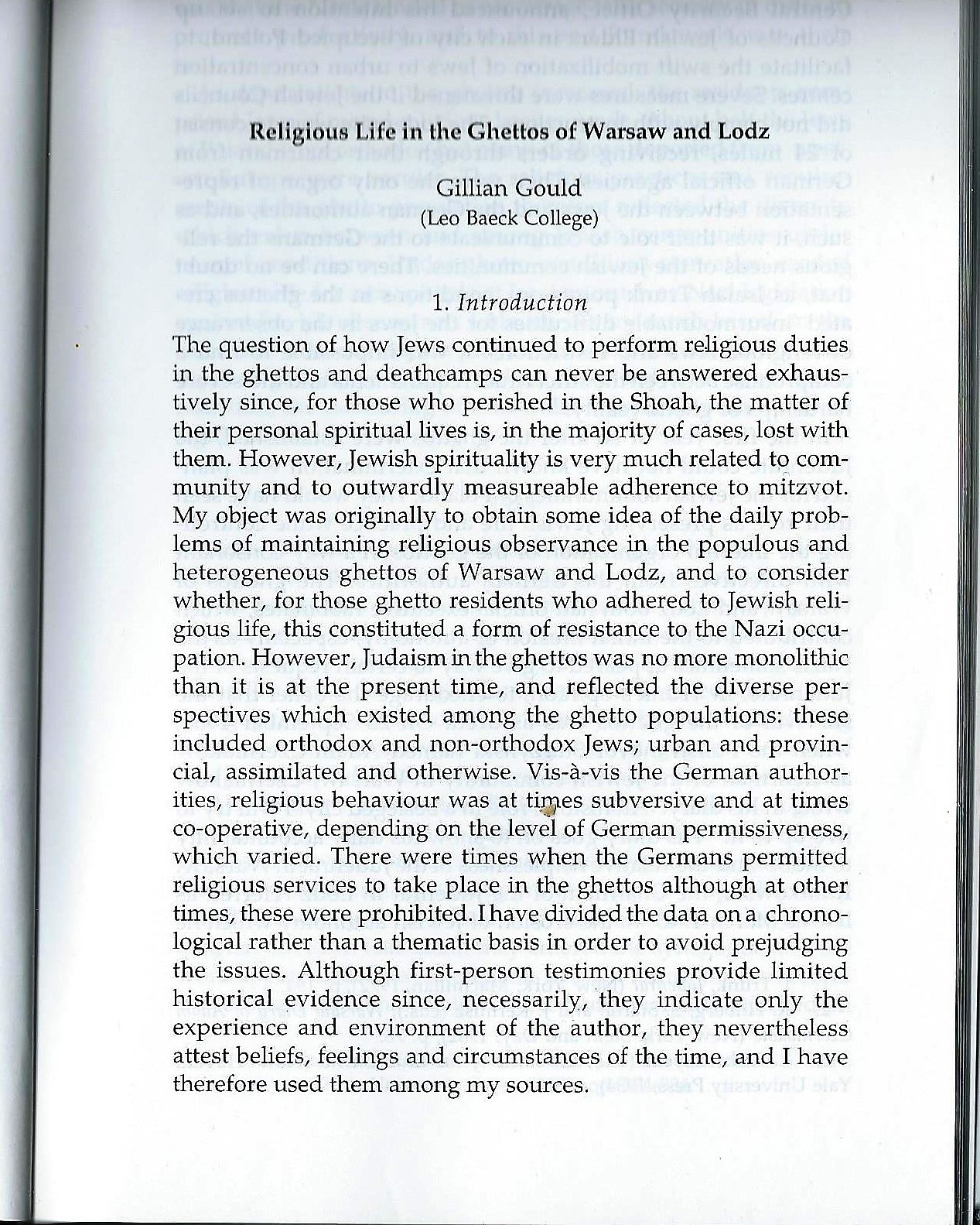
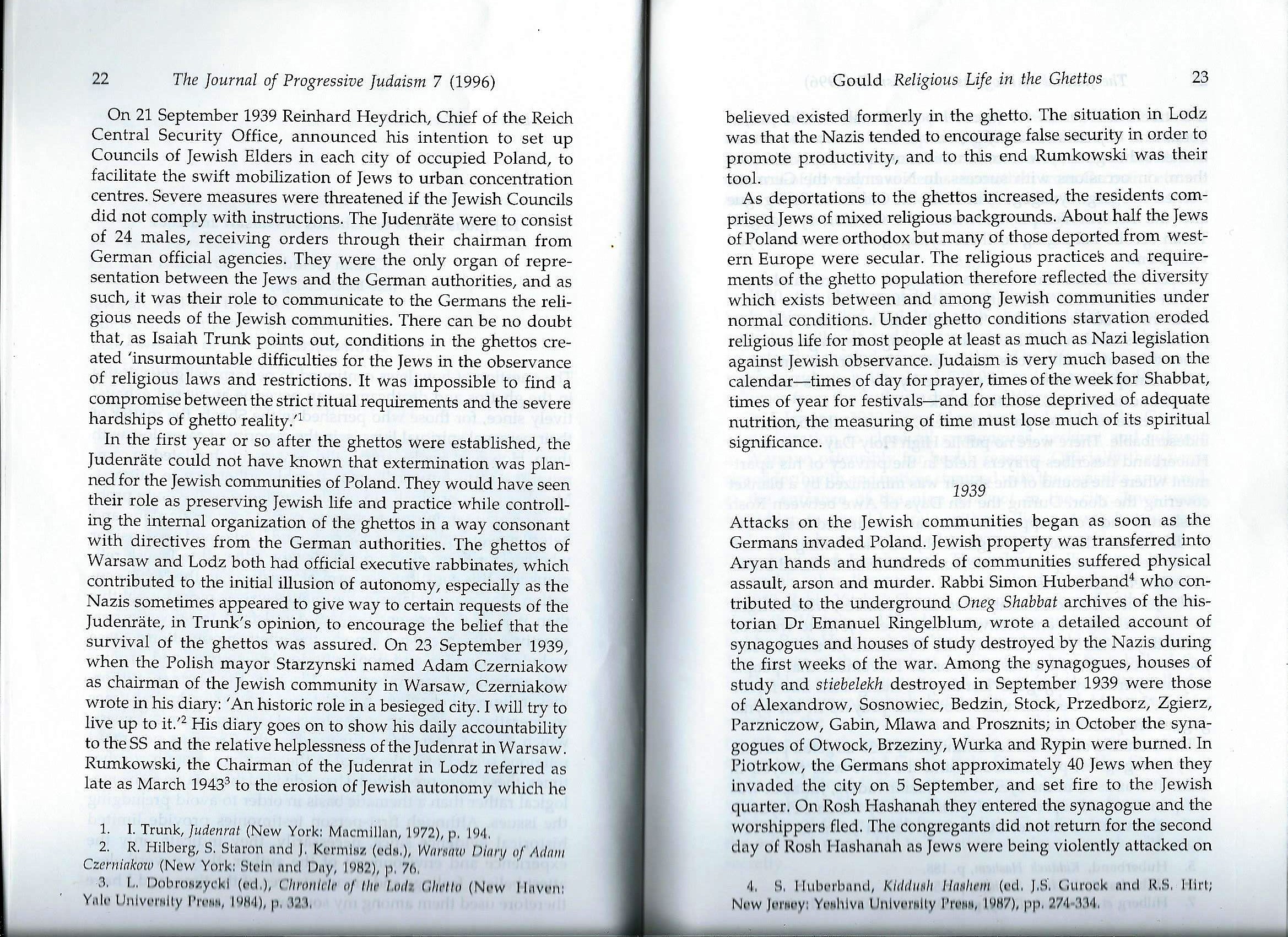
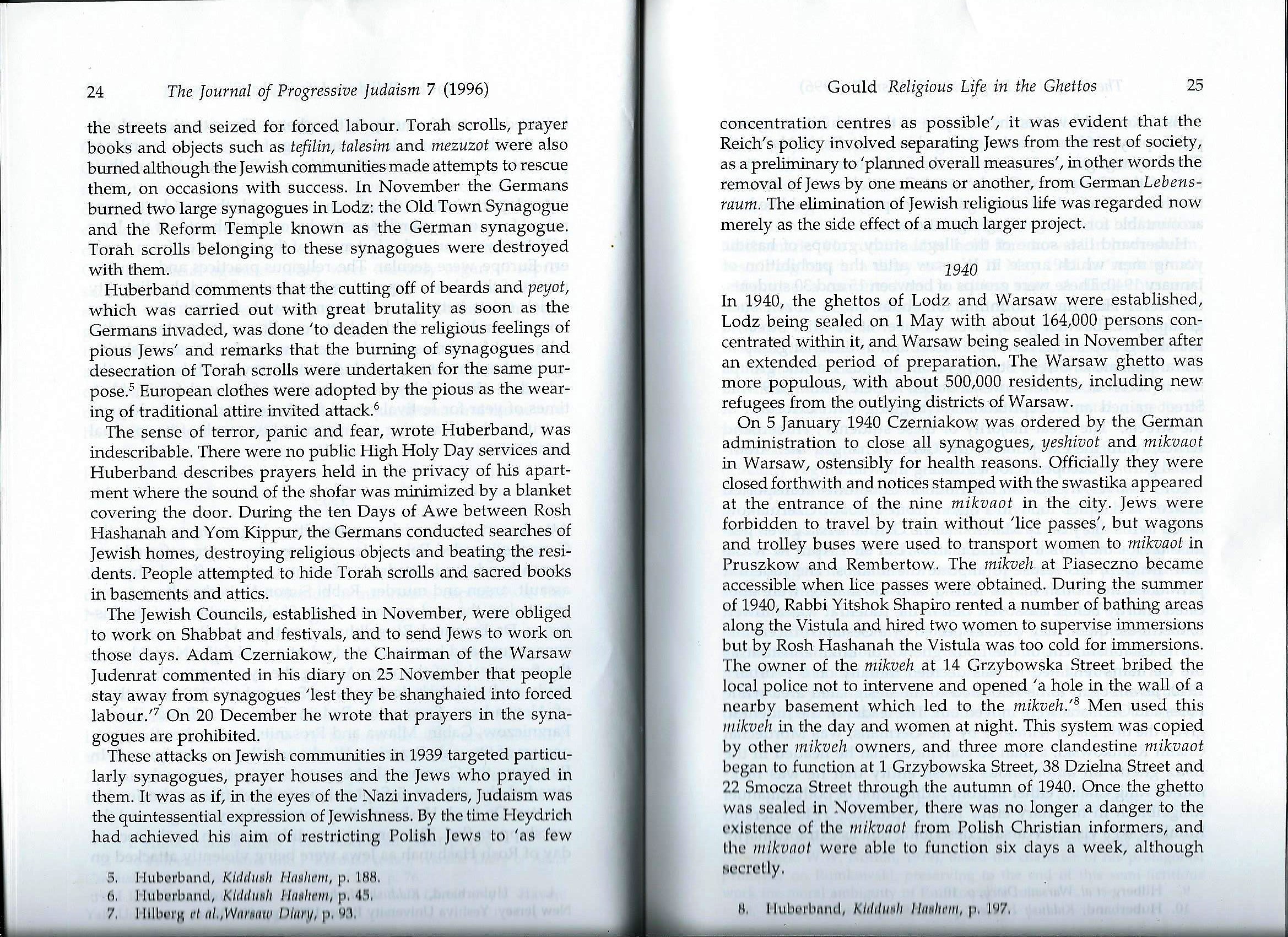
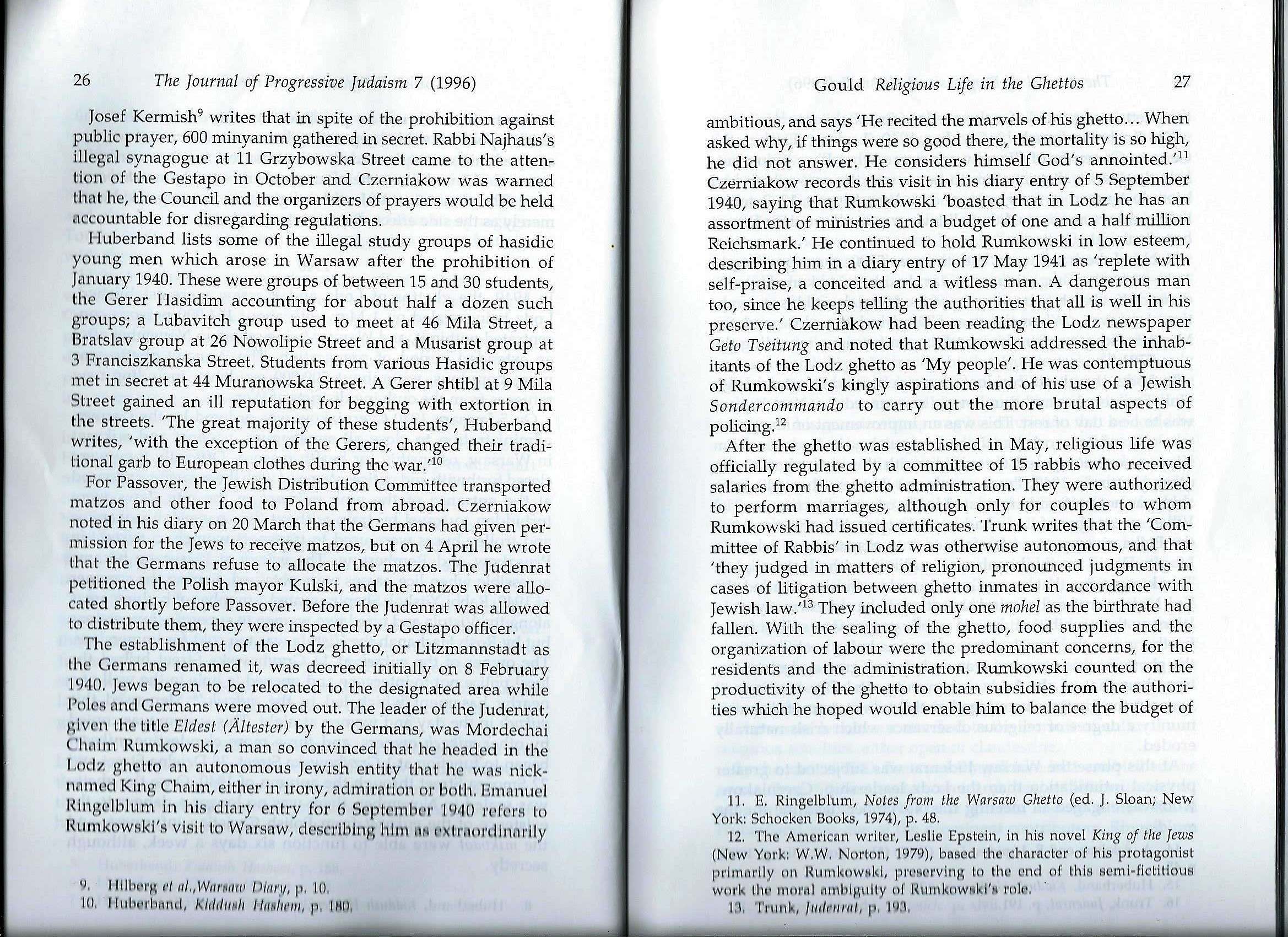
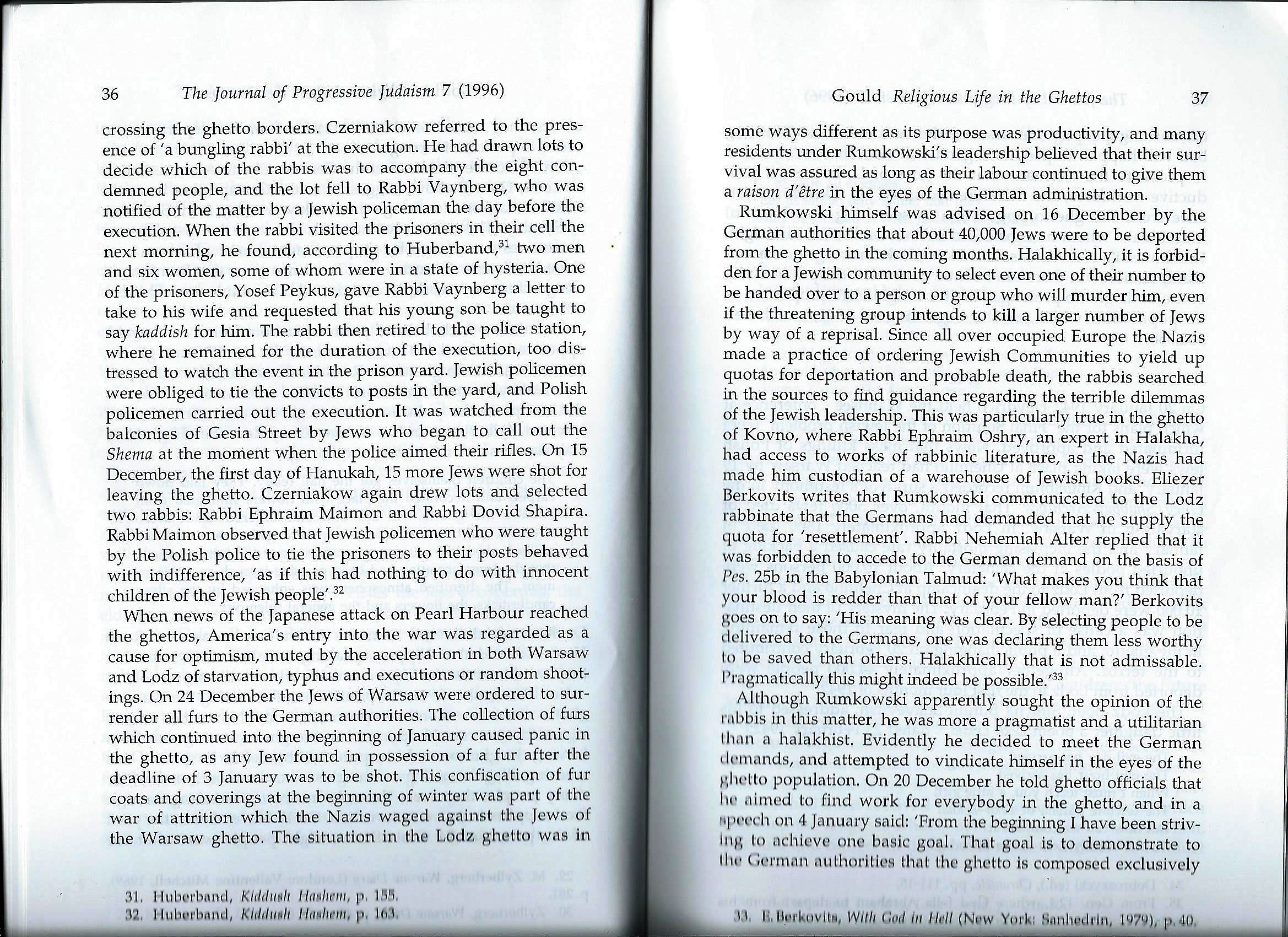
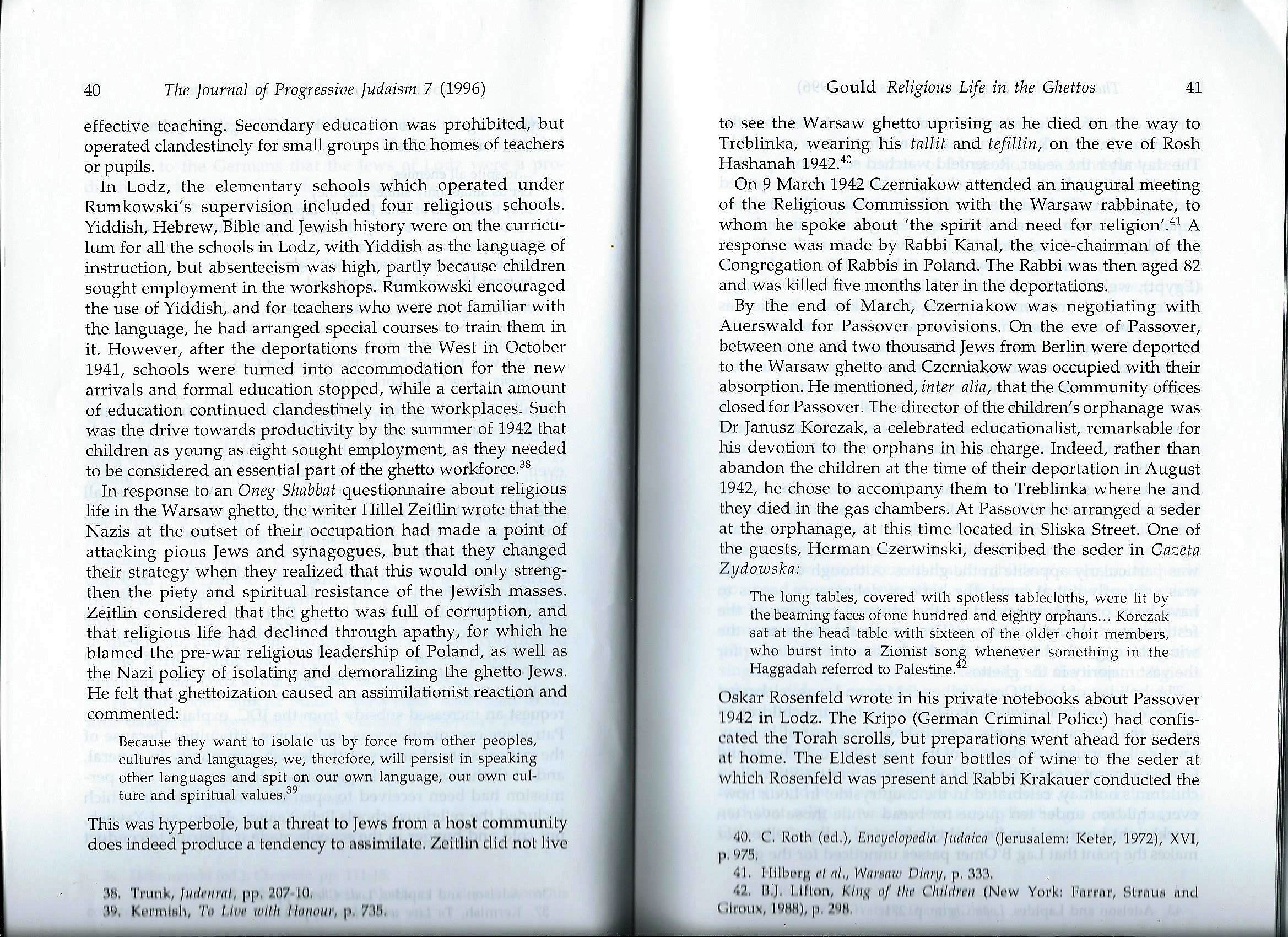
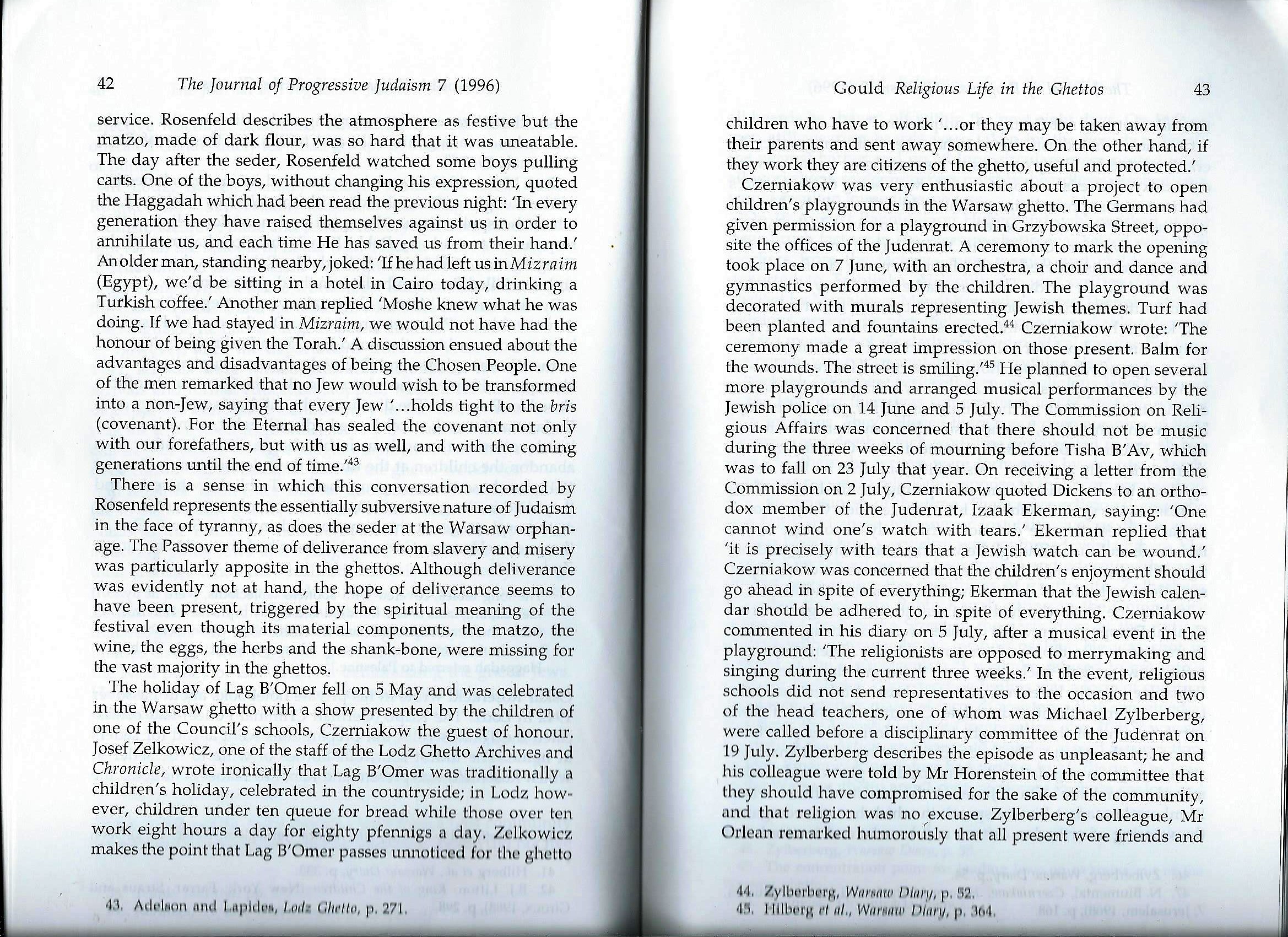
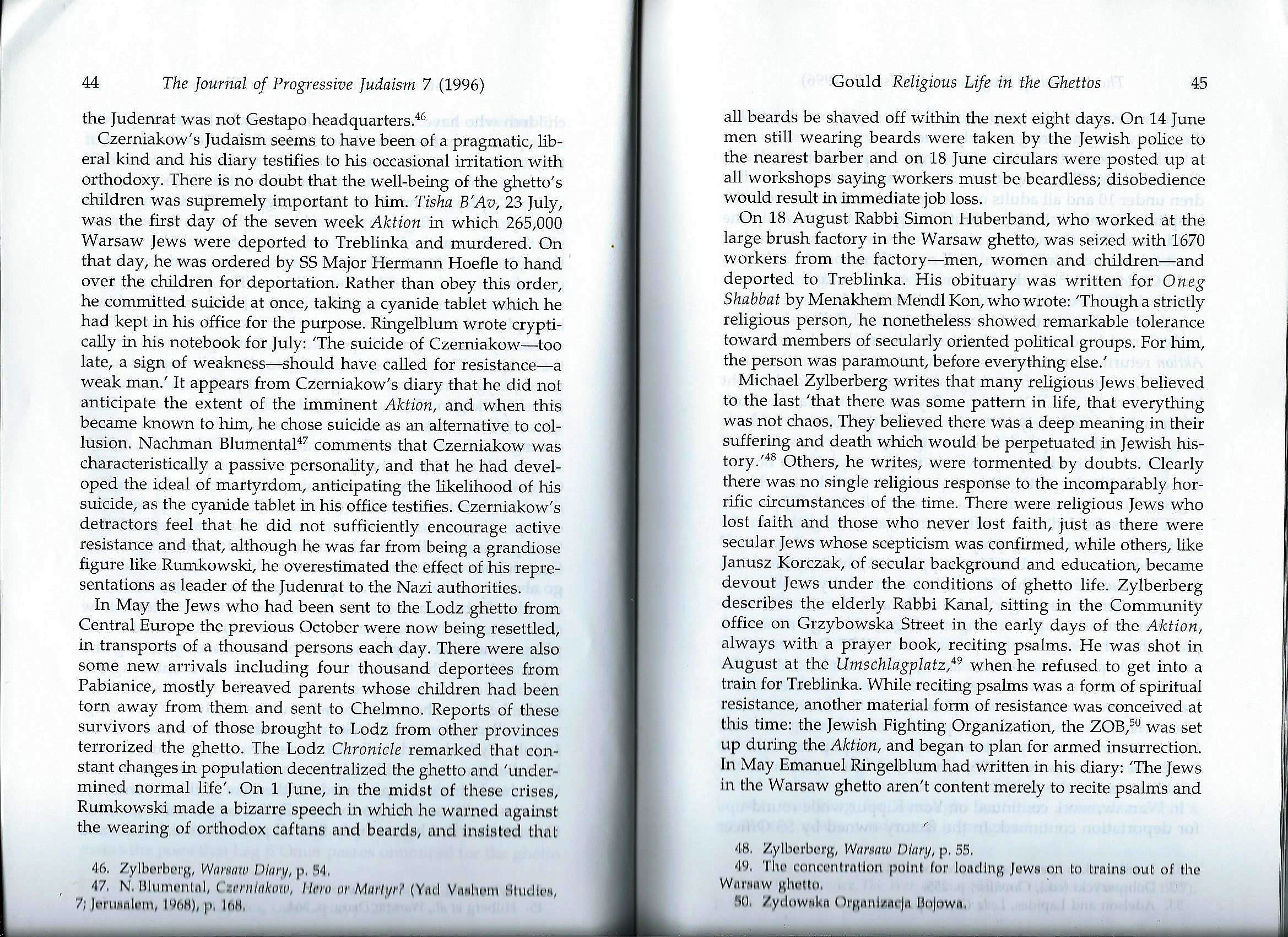
published in The Journal of Progressive Judaism, no 7, November 1996. Author: Gillian Gould Lazarus as Gillian Gould

FAUDA פאודה فوضى
Posted on: May 15, 2017
SPOILERS included
Fauda is an Israeli television series first broadcast in 2015, about an Israeli undercover operation in the West Bank, specifically aimed at a wanted Palestinian terrorist. It’s now available on Netflix. Languages are Hebrew and Arabic and the actors are Israelis and Palestinians. The series was popular among both Israelis and Palestinians.
The characters are well developed so that no one is portrayed without humanity. Acts of kindness occur as well as acts of violence. The brotherhood of men at arms is shown to be sometimes profound and sometimes illusory. Many characters are vengeful, some hot-headed, some manipulative, some cautious. Many are driven by fanaticism and we can understand why. The antagonist is a Hamas leader whose innocent brother was killed – collateral damage – on his wedding day. The protagonist’s brother-in-law was killed brutally at the instigation of the terrorist. All the women are anguished due to the roles played by their loved menfolk.
I watched, on the edge of my seat, because, as with all good drama, it was easy to feel the fear and imagine the pain. One could feel pity, if not empathy, for the beautiful bride whose groom is shot by Israelis; the Israeli agent whose girlfriend is blown up in a Tel Aviv bar by the grieving widow; the Israeli captured by Hamas, the philanthropic doctor, the elderly sheikh who blesses the terrorists and is ultimately killed by the Israelis; the Israeli captain who drives the action and talks on the phone to his children about burgers and ketchup. At the soft centre of the story is a love affair between the Israeli protagonist and the Palestinian doctor who does not know that he is an Israeli agent. He seems to fall in love with her even while practising the deception.
The series depicts acts of brutality but also unlikely friendships across the Israeli-Palestinian divide. Are the handshakes and amicable conversations entirely specious? I don’t know, but would like to think they are not. After all, the production team and actors worked together on the most sensitive of subjects, with brilliant results and the series is a success on both sides of the divide.
It would be quite possible for Israeli viewers to see the Israeli characters as righteous and likewise for Palestinians regarding the Palestinian operatives. This is to the credit of Lior Raz, writer and lead actor, who, with the rest of the cast, created rounded, realistic characters.
Fanaticism is always a topic of interest in fiction and drama, and also in our Tanakh. Who is more fanatical than Abraham, prepared to slaughter his son in obedience to God’s word? Fanatics fascinate, while their acts are questionable. Watch them from the edge of your seat but do not emulate them. Don’t emulate Abraham avinu, at least, not in terms of his fathering skills. In my view, Abraham’s finest moment was when he said ‘Shall not the judge of all the earth act justly?’ (Genesis 18:25) He was arguing with God, on behalf of the inhabitants of Sodom, in case there were righteous people among those destroyed.
This Abraham is our father, not the problematic dad of Ishmael and Isaac.
In Fauda, both Doron and Abu Ahmad are motivated by revenge and their perceptions of justice, to the extent that they are not deterred by collateral damage.
There is always collateral damage and only three people got out of Sodom alive. It would appear that God did not find ten just people there to save. The matter is not alluded to after Abraham’s intercession.
May 2017
Haazinu, Deuteronomy 32
Posted on: October 14, 2016
- In: Pentateuch | Torah | Uncategorized
- Leave a Comment
For a man who was slow of speech and meeker than anyone alive, this is quite a speech, where Moses addresses the Israelites on the last day of his life. Haazinu hashamayim meaning ‘Give ear O heavens,’ are the opening words of the penultimate sidra in our scroll. Moses does not speak of himself at all, except to say, ‘I speak’ and ‘I call,’ for this long poem which comprises his speech is a song of praise to God. Moses refers to God as Tsur, meaning rock, Elyon, meaning the highest and Avicha kanecha, your Father who made you. Many of the sayings in this portion are familiar from our liturgy. The poem invokes the infidelity of the Israelites, contrasted with God’s faithfulness and justice. The people of Israel are called Jacob and Yeshurun, meaning ‘the upright’ in the sense of upright morality, yet Moses accuses thrm of being wayward and provocative. Nevertheless, he says, God shelters them beneath His wings.
This poem in Deuteronomy 32, is called The Song of Moses. You might be reminded of Shirat ha Yam, the Song at the Sea, in Exodus 15, which is sometimes called the song of Moses and Miriam. There are other songs in the bible – notably the Psalms of David, but also Deborah’s song in Judges and Hannah’s in 1 Samuel. Jonah sings a song of praise inside the whale. The Song of Songs is an entirely poetic book of the bible, attributed to Solomon but Jeremiah also has a song book, much more mournful in tone: the Book of Lamentations.
Some of these songs do not mention the life and situation of the putative singer and would not look out of place in the book of Psalms.
The Song of Moses takes place on the final day of his life but these are not his last words. Like Jacob, he blesses the individual tribes before his death in a speech which begins with the words ‘Vezot ha berachah – And this is the blessing.’ After he has finished speaking, God sends him to the top of Mount Nebo and shows Moses the promised land, which he will never reach. Moses dies there on the mountain, and thus the fifth book of the pentateuch is brought to a close. On Simchat Torah, we shall be reading the last part of Vezot Haberachah, right at the end of Deuteronomy, as we conclude the cycle of Torah readings, before beginning again at once with Bereshit.
October 2016
They Come Back for Yizkor
Posted on: October 10, 2016
Yom Kippur 2016/ 5777
For afternoon study at XXXX XXXX Reform Synagogue
While the Yom Kippur mussaf service is going on, there’s room for the whole congregation in one hall, but when we join the main service for Minchah, the numbers gradually increase so that, by the time Yizkor starts, both halls will be filled, more or less to capacity. People who, for one reason or another, leave the synagogue during the course of the day, tend to come back for Yizkor, the service for remembering the dead. Some have been bereaved this year, others in years past and some come supported by families, perhaps their children, most of whom, we might reasonably hope, have not yet experienced bereavement.
Mourning, loss and remembering play a great part in our lives, as does the certain knowledge that our own days are numbered.
The comfort of believing that we’ll be reunited with our loved ones after death is not available to many of us, these days, even though, every time we recite the Amidah, we say that God revives the dead,.
Our synagogue has a Minhag Group, open to all members, where all aspects of our religious customs come under discussion. One topic which came up, time and time again, because members raised the subject, was the way we handled bereavements and yahrzeits, in synagogue services, for example, before kaddish and in the form of notifications: community email and notice board. There was sometimes a question of which mourners would be named. ‘Father of XXXX,’ would be typical at a yahrzeit, but what if the member isn’t in shul for the yahrzeit? Or, he’s in shul, but wants us to mention that the deceased was grandfather to his children or grandchildren, who are not in shul? Usually, the shaliach tsibbur will read all the names gladly.
Is the feeling which makes the reading of names important different from the feeling that makes us erect a tombstone, light a yahrzeit candle or visit a grave?
Are these questions connected with memorializing, rather than grieving, or is there an overlap? Do social norms influence the way we remember? People sometimes weep when the name of their loved one is read out before kaddish, so it must happen that the respectful ritual of the yahrzeit interacts with the painful sense of loss.
How do we memorialize? With prayers, tombstones, donations; a newborn child of the family may be named after the deceased. We speak of those we have lost, look at photos, movies, voice recordings, if we have these mementos. We research history and genealogy. We value things which belonged to them and things they valued. We feel the loss and, if we lose someone close to us, our lives are never the same.
Psalm 103 tells us that life is short and lives are forgotten, sooner or later. We know this is true for us, as well as those who have gone ahead. How do we want to be remembered, if indeed we expect to be remembered? Some of us contribute to science, the arts, education or the well-being of humanity. Some of us have children. Some of us write wills.
At the Bafta and Oscar award ceremonies, every year now, they play a montage of images of those from the film industry who died in the past year. The names and professions are written underneath the smiling faces. Some are world famous, others are cameramen or costume designers, whose faces most of us don’t recognize. The music accompanying the montage of images adds to their poignancy.
There is a memorial fountain in Hyde Park to Princess Diana. Rabin Square, formerly Kings of Israel Square, in Tel Aviv is named in memory of Yitzhak Rabin. The very famous have airports named after them – not just Kennedy, De Gaulle, Ben Gurion, Indira Gandhi, but Marco Polo and Leonardo da Vinci, and also John Lennon, John Wayne and George Best.
There are prescribed prayers for entering a cemetery, including mechayah hametim. In the El Male Rachamim, we pray for the peace of the soul of the departed; that God will shelter them eternally and bind their soul in the bond of life.
Is the survival of the soul taken for granted in these prayers, or is it a liturgical convention, to speak as if death were not the end of life?
If we are not convinced of a supernal afterlife, is the nature of memorializing in this world even more important?
While I was writing this, an item came on the news about Jo Cox, the murdered MP, and the work she was doing to support a volunteer civil defence organization of neutral, unarmed Syrians, called the White Helmets. It was said that the White Helmets rescue people from danger without ascertaining who they are, or what side they’re on. It seems to me that, if they save lives, and Jo Cox effectively supported their work, that would be one kind of everlasting memorial.
By the next time I open this document, I have read that the White Helmet organization has been nominated for the Nobel Peace Prize. It has also been referred to by those who oppose it, as a wing of Al Qaeda. The truth or falsity of this assertion cannot make an iota of difference to the way Jo Cox is remembered. Or can it?
Can we even know what will be memorable, what will have a good outcome and what will be ephemeral, a candle in the wind, as they say, or a flower of the field?
As for ‘everlasting to everlasting,’ me-olam v’ad olam, we invoke it in our liturgy, but, for many of us, it’s just an expression, the poetry and metaphor of prayer.
In death as in life, good intentions can be lost and legacies compromised, but those we loved, we remember with love as long as we live.
- In: Pentateuch | Torah | Uncategorized
- Leave a Comment
I never take much notice of the Eurovision Song Contest, least of all the songs, but I sometimes watch the voting, with some slight interest in how countries often vote in clusters. The Balkan countries back each other and the Danes and Swedes seem to have a reciprocal arrangement, while the UK and Ireland give each other a bounce on the voting board, as if Gerry Adams had never existed.
The strange thing is that neighbouring countries are as likely to go to war across the border as to appreciate each other’s musical artistry.
I wondered how it would have worked in biblical antiquity. After all, the Ammonites and the Moabites were related to Terach, same as Abraham, and even the wicked Amalekites were descended from Isaac, via Esau.
As for the Canaanites whose land is spied out by Moses’ agents, would they bestow their douze points on the Israelites, or take revenge on them by giving everything to the Jebusites, the Amorites and the Hittites?
The spies Moses sent into Canaan brought back disheartening reports of giants inhabiting the land, but they’d noted that it was rich and fertile and they coined the phrase, ‘a land flowing with milk and honey’.
The word supposed to mean giants is Nephilim, fallen ones, suggestive of fallen angels, in other words, beings possessed of supernatural power. Everyone was afraid, except for Joshua and Caleb, who were convinced that they could gain the land by conquest. As usual, the people blamed Moses for bringing them out of Egypt, where they said they’d been better off. You can imagine how they would have been ready to give Egypt all their points in the North East Africa Song Contest.
The people were so rebellious that God said to Moses, ‘How long will this people despise me?’ and was about to smite them with a plague, only Moses pleaded with God, on behalf of the Israelites. God then replied ‘Salachti kidvareycha’ – ‘I have forgiven, according to your word.’
However, that generation of Israelites wandered forty years in the wilderness and never reached the promised land, with the exceptions of Joshua and Caleb, who had not despaired or rebelled against God.
Joshua would go on to enjoy good relations with a Canaanite woman called Rahab, who sheltered Joshua’s Israelite spies before the Battle of Jericho, described in the book of Joshua. In Midrash, Rahab is a beautiful prostitute, or possibly an innkeeper, and these midrashic versions are quite romantic because Joshua marries Rahab, even though she’s a Canaanite.
The people across the border – what are they, enemies or neighbours? And can they sing?
written on the day of an EU Referendum in the UK, 23 June 2016
We need to talk about Ken
Posted on: April 29, 2016
Sermon to XXXXX-XXXXX Reform Synagogue on 30 April 2016
When I heard Ken Livingstone yesterday, doing the rounds of the news channels, I thought he must have gone too far, even for his admirers, and that he was bringing himself and his party into disrepute.
I underestimated the number of people seeking to justify Ken’s loose assertion that Hitler promoted Zionism in the early 1930s.
Like thousands of others, pro Ken and anti, I started googling the Haavara Agreement, which is readily found on Wikipedia and therefore cited by Livingstone’s online supporters, especially if they want to say – and they often do – that there is a natural affinity between Nazism and Zionism.
I wanted to get an idea from Jewish and Israeli historians of the alleged collaboration with the Nazis, and whether it was used for the purpose of aliyah, immigration to Palestine. I read that the Haavara Agreement allowed Jews to escape from Germany to Palestine in return for paying a ransom to the Reich. I read also that there were some in the Yishuv movement, which aimed at Jewish settlement in the land, who prioritized emigration from Germany rather than supporting an anti-Nazi boycott. They made choices which were either pragmatic or collaborationist, depending on how you look at it, but Jews who got to Palestine were much more likely to survive.
In a comparable way, the Jewish leaders of the wartime Judenräte, the Jewish Councils in the ghettoes, were forced to have dealings with the Nazis governors. How this worked varied from ghetto to ghetto. In Warsaw, the Chairman of the Judenrat committed suicide, rather than fulfil quotas for deportation, whereas the Chairman in Lodz strove to fulfil the quotas, arguing that those remaining in the ghetto would be allowed to live. With the advantage of hindsight, we know he was wrong.
It’s widely observed that at the present time, if someone wants to discredit Jews, the first and least controversial move is to discredit Zionism. In the nineteenth and twentieth centuries, it was the fashion to use racist pseudo-science against Jews and, then, in the twentieth century, Bolshevism, Capitalism and World Domination. Bolshevism has bitten the dust, but we are still accused of global domination through international banking and conspiracies. When I read about these Jewish conspiracies, I feel like asking why I’ve never been invited to one.
I must admit to using the key word Talmud in a Twitter search, which is asking for trouble. What comes up? Nothing about the kashrut of certain ovens for Passover use, you can be sure ( Bava Metzia 59b). Instead, antisemitic geeks cite passages from the Talmud which appear to promote all kinds of criminality and perversion. They sometimes show the text in Hebrew, which is a marvel since they often have inadequate command of English. Hard work goes into their posts and sometimes hard work goes into refuting them.
I am uncomfortable with the idea of hard work being necessary to refute Ken Livingstone or those others, who never admit that they or anyone is being antisemitic.
Yet I know that all history and all scriptures are in some way compromising. When violent passages in the Qur’an are cited to indicate the inherent violence of Islam, it cuts no ice. We have, and tend to reject, unenlightened passages in our own holy books. Even in our sidra today, Acharei Mot, there are far too many animal sacrifices for comfort.
For me, the crux of the matter is how to respond when moral ambiguities of Judaism or Zionism are highlighted by those who seek our harm, if indeed we should respond at all. It seems as if being well-informed about our own history and our literature ought to help, but information never seems to settle the questions.
I don’t have an answer but I think we can usually discern when somebody means us harm. If somebody hates a Jew because of the alleged massacre at Deir Yassin, or a Muslim because of ISIS or a Christian because of the Inquisition, then it isn’t because they’re well-informed. When Ken Livingstone cited the Haavara agreement, it was to put Zionism in the same ball park as Nazism, and not to disseminate knowledge.
Reading this through a year later, on 4 April 2017, I think I was too mild about Ken. Possibly I imagined that he might row back from his provocative statements. During the last year, he has made a crusade of voicing opinions about Hitler’s alleged sympathy for Zionism. It hardly needs to be said that Hitler first wanted Jews out and very quickly wanted them dead. Zionists wanted Jews out and alive, which, b’ezrat Hashem, we are.
Two goats and a lottery
Posted on: April 24, 2016
- In: Pentateuch | Torah
- Leave a Comment
Acharei Mot Leviticus 16: 1 – 17
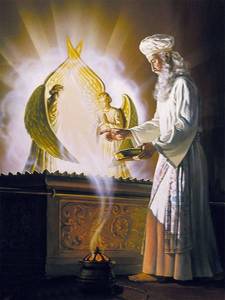
The sidra is what you might call hard core Temple cult, involving animal sacrifices, incense and the prescribed clothing of the high priest. As far removed as this is from Judaism as we practice it, there is a very familiar component in the ritual, and that is the two goats which we invoke on Yom Kippur, the scapegoat and the sacrificial goat, whose life expectancy is even shorter than that of the scapegoat.
You will hear the word kaporet several times. This was the cover of the ark, adorned with two Cherubim, in the Holy of Holies, which the High Priest entered only on Yom Kippur. The letters of the word kippur, atonement, are also in the word kaporet, and the linguistic connection may indicate a view of atonement as a kind of covering of sin. You will also hear the word parochet, a curtain in front of the ark, such as we have here, on the ark doors. It’s often translated as ‘veil’ and the kaporet often as ‘the mercy seat’.
The name of the sidra is Acharei Mot, meaning, ‘After the death.’ It refers to two of Aaron’s sons, Nadav and Abihu , who died during their priestly duties, while offering the wrong kind of fire on the altar. Rabbinic tradition attributes this misadventure to some fault in their attitude, rather than tragic happenstance. Specifically, a midrashic commentary explains that they were drunk when they approached the altar.
The instructions which God gives Moses to impart to Aaron are a detailed blueprint concerning the conduct and procedure of the priests presiding over the altar, designed to protect them from the kind of sudden death which befell Nadav and Abihu. Whenever we read ‘God said to Moses, “Speak to Aaron,”’ we are not looking at a conversation between brothers, but at the laws concerning the priesthood, which is personified by Aaron, the first Cohen HaGadol or High Priest. There are requirements of dress, in fine linen, of bathing and of course, rules concerning the different animals for sacrifice: the young bull, the ram and the two goats, familiar to us from our Yom Kippur Mussaf service: the goat for the Lord and the goat for Azazel.
A lot is cast to determine which of the goats is destined for the sacrificial altar, as a sin-offering, and which is destined for the wilderness, and Azazel. These life and death matters are guided by the minutiae of ritual set forth in Leviticus, the priestly handbook. As the sons of Aaron were killed by so-called strange fire while officiating at the altar, it was considered that there was an element of mortal danger in carrying out priestly duties. God’s words to Moses, to be conveyed to Aaron, are to ensure that there are no more fatal slip-ups in the execution of sacrificial practices.
We use the word scapegoat, which was coined by William Tyndale, translating the bible into English, in the time of King Henry VIII. The word scapegoat implies blame or punishment, and the selection of two goats is typical of a binary system of sacrifice, suggesting opposing sacred and profane symbolism. We see such distinctions between the pairs of brothers in Genesis: Cain and Abel, Isaac and Ishmael, Esau and Jacob. Cain, Ishmael and Esau survive, like the scapegoat, but are sent away, into the equivalence of the wilderness.
A word about Azazel.
The most detailed accounts of Azazel are found in the apocryphal books of Enoch where he is identified as a fallen angel who teaches people to make weapons, jewellery, and cosmetics. The books of Enoch are post-biblical but the authors use texts from Genesis and Daniel to create a detailed angelology, which is absent from the bible.
The medieval commentators Rashi and Ibn Ezra, no doubt smoothing over a residue of polytheism in the biblical text, suggested that Azazel was a place name, a rugged mountain from whence the goat was pushed, but Nachmanides, taking the goat by the horns, commented that Azazel belongs to the class of goat-like demons of the desert, known via Mesopotamian mythology.
Midrash identifies the scapegoat (seir) with Esau who was called Seir, meaning hairy, and whose descendants lived in territory called Mount Seir, named after him.
Azazel appears as a fictional character in Mikhail Bulgakhov’s Stalin-era novel, The Master and Margarita, where he is portrayed as an uncouth but somewhat benign demon in the service of Satan. Bulgakov latinizes the name Azazel as Azazello.
James George Frazer in his anthropological classic The Golden Bough, reported scapegoat-type rituals in Asia, Central and South America, East Africa and New Zealand. Frazer considered the rituals primitive, saying: ‘The notion that we can transfer our guilt or sufferings to some other being who will bear them for us is familiar to the savage mind.’ Frazer wrote this in 1890 but the evidence of the last century and a quarter suggests that scapegoating is a ritual not confined to savage minds and that it is neither extinct nor dormant.
April 2016
Troubled by the Deuteronomist
Posted on: August 22, 2014
- In: Pentateuch | Torah
- Leave a Comment
Re’eh Deuteronomy12:29 – 13:19
When I first looked at the Torah reading, Re’eh, with a view to preparing this introduction, it was the day after a ceasefire commenced in Israel and Gaza. All hell was breaking loose in the UK over Baroness Warsi and the Tricycle Theatre. That now seems a long time ago; ceasefires have come and gone; I’m writing this on Wednesday and I feel with pessimistic certainty that there will be further developments by Shabbat.
There was no getting away from the fact that our text begins, “When the LORD your God cuts off before you the nations whom you go in to dispossess, and you dispossess them and dwell in their land…’ and I wondered if it was going to get better as it went on.
The charge against the other nations is that they sacrifice their children to their false gods, particularly a deity called Moloch.
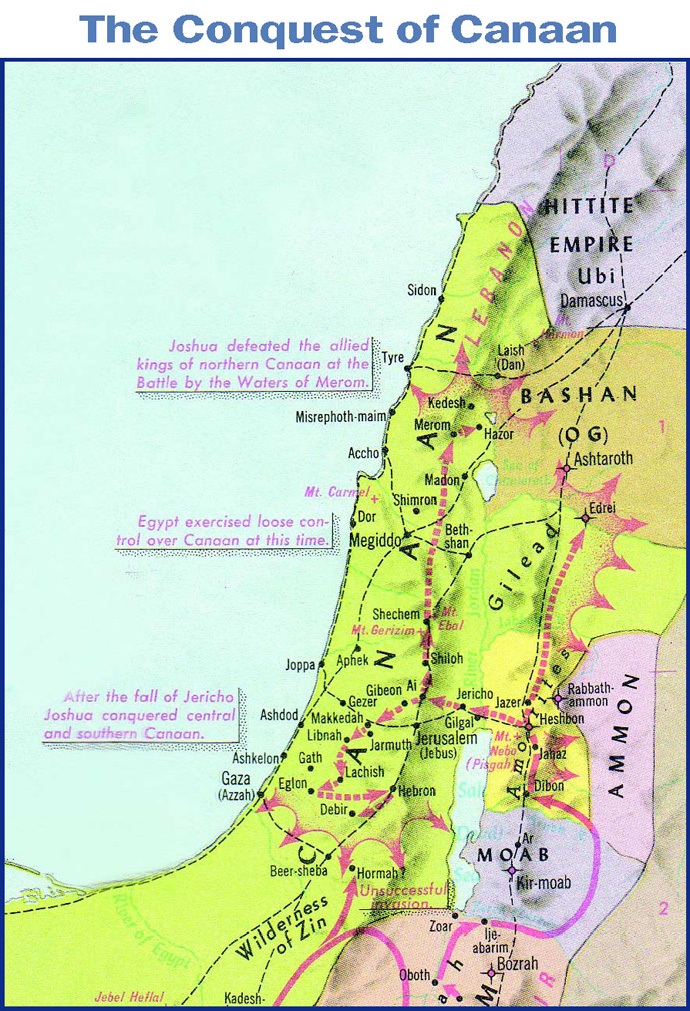
The text goes on to say that, if a false prophet should arise, and promote the worship of other gods by claiming supernatural knowledge of them, this prophet should be rejected and executed. And if members of your family urge you to follow other gods, resist them. Indeed, our text commands that all such people who advocate pagan worship should be put to death. If a whole town turns to paganism, there should be a herem on that town, people, animals and property. The valuables are to be burned and the town is not to be rebuilt. To carry out a herem is translated variously as to ‘ban’ or ‘proscribe’ or ‘totally destroy’. It is used typically of hostile towns, and, in today’s language, signifies ethnic cleansing or genocide. It is a term used very much in the book of Joshua, in which Joshua leads the Israelites into the promised land and battles to displace the Canaanites and other non-Israelite inhabitants.
So what is the agenda of the book of Deuteronomy, and by implication, the book of Joshua, which, according to the documentary hypotheses, has authorship in common with Deuteronomy?
The book of Deuteronomy plays a very significant part in the account, in the second book of Kings, of the reign of Josiah who had ordered repairs at the Temple in Jerusalem. A sefer Torah was discovered, which, by its content, appears to have been Deuteronomy. Josiah had it read aloud to the people and then set about destroying the idolatrous altars which proliferated in Jerusalem and beyond.
Josiah’s zero tolerance of pagan worship may have been influenced by the militancy of the Deuteronomists, or, vice versa; a case has been made (Frank Moore Cross) to say that the book was written to endorse Josiah’s policy. The suggestion that the passage we are going to read was written in a particular, historical context doesn’t sit well with the Torah min shemayyim view, that Moses received Torah on Sinai.
And this, I think, is the difficulty in the present context of synagogue worship. It’s relatively easy for me to explain the parasha by talking about the agenda of the Deuteronomists, but much more difficult to read it as Holy Scripture and then square it with the commandment to love the stranger. It would call for the kind of exegetical contortionism which is beyond me, so all I can say is listen to it yourselves and then, go figure.
It’s because there are passages like this in Tenach, difficult to explain at the very least, that I don’t like to quote other people’s holy books against them. The crimes people perpetrate in the name of scripture are their own crimes, not, as Richard Dawkins would have it, the crimes of religion per se.
And if God did give us the written Torah, he also gave us the world to inhabit. Nothing about our bible gives the impression that this will ever be easy, but then, according to a famous dictum from Pirke Avot, ‘It’s not for us to complete the work, though neither are we free to desist.’ Meaning what, in this context? Let’s say I mean that Torah is always a work in progress, never completed, not unlike the road works in Myddleton Park Road.
 Neviim Tovim, blogs by Gillian Gould Lazarus